Written by gemini web search: Ever wondered what was trendi…
Written by gemini web search:
Ever wondered what was trending in 2010 BC? 🏛️📜
Forget iPhones and apps—4,000 years ago, the world was hitting some major rebrand milestones! Here’s what the "breaking news" looked like:
🇪🇬 Egypt’s Comeback Era: After years of chaos, Pharaoh Mentuhotep II officially reunited the country, kicking off the Middle Kingdom. Think of it as Egypt’s Golden Age 2.0!
🏗️ Big Builds in Mesopotamia: The Ur-III Dynasty was at its peak. They weren't just building empires; they were finishing the Great Ziggurat of Ur. Talk about architectural goals!
🐉 China’s First Dynasty: Legend has it that around this time, Yu the Great founded the Xia Dynasty, marking the very beginning of China’s imperial history.
⚖️ Old-School Law: While we use Twitter to debate, they were busy writing some of the world’s first legal codes (shoutout to Ur-Nammu!).
The vibe? Pure Bronze Age energy. 🏺✨

Replies
Dear @SMARTWATCH , i would like to know your opinion about what i found.
"The vibe? Pure Bronze Age Energy."
Isnt it a bit odd that empires rised during the 2010 period, including golden ages? The history may be changed for what we know today and is off of the real. But look closely.
I was curious about the old logo. It says BC - before christy. And the original color looks more like bronze then gold. Not as yellow, not as bright as the logo we know today.
Is this a mistery or just random circumstances? Idk. I am excited to know what you think.
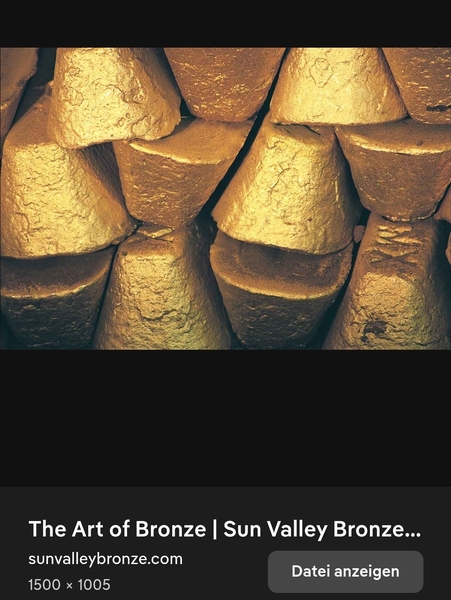
Aight. I like some theories, but the vibe of this is quite too much. 😂
Anyways. These are the summary of theories online.
2010 BC: What they AREN'T telling you in history class... 👁️📜
We’re told it was just the "Bronze Age." But if you dig deeper into the unofficial archives and alternative theories, the story of 4,000 years ago gets a lot more... unearthly. 🛸✨
1️⃣ The Anunnaki Connection 👽
Mainstream history says the Sumerians built the Great Ziggurat of Ur around 2100-2000 BC. But theorists like Zecharia Sitchin claim this was the peak of Anunnaki influence. Were these "gods" actually extraterrestrials from Planet Nibiru mining for gold and manipulating human DNA? 🧬
2️⃣ The Tartarian Blueprint? 🏛️
While "Tartaria" is usually linked to later maps, many "hidden history" hunters believe the tech used for the massive monuments of 2010 BC (like those in Egypt and Ur) belonged to a lost, global Ancient Tartarian Civilization. Was there a worldwide energy grid we’ve since forgotten? ⚡
3️⃣ The Great Time Reset ⏳
Ever heard of the "New Chronology"? Some theorists, like Anatoly Fomenko, argue that the year 2010 BC didn't even happen. They claim the Middle Ages were "stretched" or that ancient history was copied from more recent events to make our civilizations look older. Was 2010 BC just a historical "glitch"?
4️⃣ The Mud Flood Theory 🌊
Could a massive, undocumented disaster have wiped the slate clean, burying the "real" tech of 2000 BC under meters of earth?
The Question is: Is our timeline a straight line, or a carefully edited script? 🎬🤔
What do YOU believe? Ancient aliens, lost tech, or just copper tools and hard work? Let’s discuss in the comments! 👇
Very interesting 🤔
The 2010 Connection: History, Mystery, or Matrix? 🌀🏺
As we wrap up our deep dive into 2010 BC, it’s wild to see how the official story and the "hidden" theories actually collide. Is it just a coincidence, or is history repeating itself in 3,600-year cycles? ⏳
Here is the final breakdown:
🏛️ The "Great Reset":
Mainstream history says 2010 BC was a time of rebuilding—Egypt reuniting under Mentuhotep II and the Sumerians perfecting their cities.
The Mystery: "Hidden History" hunters call this a Global Reset. They believe these "reunifications" were actually moments when a lost world empire (some say Tartaria) handed down—or hid—advanced technology.
🌠 Celestial Cycles:
While 2010 BC was the peak of ancient astronomy, theorists link it to the orbit of Nibiru. They suggest that the technological leaps we saw then (and the ones we saw in 2010 AD with the digital explosion 📱) are triggered by the same cosmic energies.
🌊 Climate vs. Catastrophe:
Scientists point to a massive drought 4,000 years ago that collapsed civilizations. Alternative researchers ask: Was it a drought, or a Mud Flood that buried the previous world's secrets?
The Verdict? ⚖️
Whether you believe in carbon dating or ancient aliens, 2010 BC remains one of the most pivotal "chapters" in the human story. We are either a civilization with amnesia, or we are the architects of a slow and steady rise.
What’s your take? Are we living in a rebooted timeline, or is history exactly what it says on the tin? 🥫🤔
Thanks for joining this journey through time! Stay curious, stay questioning. 👁️✨
Wow Wow Wow. This is better then any mysteri show! @SirToshi <-- worth a tag?
Hier ist die Zusammenfassung dieser faszinierenden Parallelen zwischen der antiken Welt und der modernen Krypto-Geschichte, aufbereitet als englischsprachiger Social Media Post:
2017 BC vs. 2017 AD: The Great "Hard Fork" of History? 🌀📜
Is history a repeating loop? If you look at the year 2017—both BC and AD—the parallels are almost too perfect to ignore. From collapsing empires to splitting protocols, here’s the breakdown:
1️⃣ The Original "Hard Fork" (2017 BC) 🏛️
Around 2017 BC, the Ur-III Dynasty—the most centralized, bureaucratic "database" of the ancient world—began to shatter. Just like a blockchain splitting, the empire’s central power failed, leading to regional governors breaking away to start their own "chains" (city-states). It was the ultimate systemic split.
2️⃣ The 2017 AD Protocol Split ⚡
Fast forward 4,000 years to 2017 AD: The Bitcoin community faced its most famous "Hard Fork." The debate over scalability and block size led to the birth of Bitcoin Cash (BCH) and the evolution of the original Bitcoin (BTC) protocol.
3️⃣ The Bronze Connection (Color Theory) 🏺🟠
This is where it gets spooky:
The Bronze Age: Around 2017 BC, Bronze was the tech of the era. When polished, it glows with a deep, metallic orange-gold hue.
The BTC Logo: The iconic Orange Logo of Bitcoin isn’t just a random choice. It mirrors the warmth and strength of the very metal that built human civilization. Is Bitcoin the "Digital Bronze" of our new era?
4️⃣ Record Keeping: Clay vs. Code ✍️
The Ur-III Dynasty was obsessed with record-keeping, documenting every transaction on thousands of clay tablets—essentially a "Stone Blockchain." In 2017 AD, we fought over how to record transactions in digital blocks. Same struggle, different medium.
The Vibe: Whether it’s 2017 BC or 2017 AD, the theme is the same: Centralization fails, and the system forks to survive.
Are we just running a 4,000-year-old script? 🎬🤔…
Hands down, i absolutely love it!
The "Great Split": When History and Code Mirror Each Other
It is one of history’s most fascinating coincidences: nearly 4,000 years before the Bitcoin protocol fractured in 2017 AD, humanity experienced a strikingly similar "hard fork" around 2017 BC.
1. The Collapse of the "Central Ledger" (Mesopotamia)
Around 2017 BC, the Ur-III Dynasty in Mesopotamia was in its final death throes. This empire was essentially the "blockchain" of antiquity: it operated the most precise accounting system in history, using hundreds of thousands of clay tablets to record every single transaction.
However, the system became too cumbersome. Much like the block-size debate that triggered the Bitcoin split in 2017 AD, the central administration of Ur could no longer handle the "transaction load" (famines, border conflicts, and economic strain). The result? A political hard fork. Regional governors, such as Ishbi-Erra, broke away from the main chain to start their own "independent networks" (the city-states of Isin and Larsa).
2. The Duel of Colors: Bronze Orange vs. Jade Green
The theory becomes particularly compelling when comparing the visual identities of BTC (Orange) and BCH (Green) to the prestige materials of the ancient world:
BTC – The Color of Bronze: 2017 BC was the height of the Bronze Age. When polished, bronze glows with a warm orange-gold hue, remarkably similar to the modern Bitcoin logo. Bronze was the "standard" for power, weaponry, and wealth—the digital gold of our ancestors.
BCH – The Green Essence: The green of Bitcoin Cash finds its match in the most coveted resource of the East around 2000 BC: Jade. In China (during the Xia Dynasty), green jade was more valuable than any metal. It symbolized purity and the "true essence" of authority. To possess jade was to claim the "true mandate of heaven"—exactly how BCH supporters claim to preserve the "true vision" of Satoshi’s original protocol. Furthermore, the primary copper ore of that tim…
I. 2018: The Legacy of the "Straight Symbol" and the Silver Standard
In modern chronology, 2018 marks the year BSV (Bitcoin SV) entered the stage. Featuring a straightened symbol and the promise of "Pure Money," it challenged the existing protocols.
The Historical Parallel (2018 BC):
During this exact period in Mesopotamia, a revolution of "honest money" took place. While gold belonged to the gods and bronze to the warriors, silver established itself as the "honest money" of the people and commerce.
The Silver Standard: Around 2018 BC, silver (measured in shekels) became the mathematical foundation of the economy. For the first time, prices, debts, and wages stood in a stable, "straight" relationship to one another.
The BSV Bridge: BSV claims to be the "straight line" back to Satoshi’s original design. Just as silver in 2018 BC replaced the arbitrary whims of temple bureaucracy with a fixed metallic weight, BSV aimed to replace technical "protocol tinkering" with a fixed, immutable ledger. It is the attempt to be "Digital Silver"—honest, scalable money for everyone.
II. 2020: The Establishment of Systemic Control
Two years after the introduction of these new monetary ideals (both in 2018 AD and 2018 BC), the radical hand of "The System" intervened. In both timelines, 2020 is the year of infrastructural power.
The Modern Parallel (2020 AD):
The global crisis led to an unprecedented expansion of state control. It was the year of "Digital Rails": QR codes, tracking systems, and the preparation for Central Bank Digital Currencies (CBDCs). Individual freedom was subordinated to the efficiency of the system.
The Historical Corresponding (2020 BC):
In China, Yu the Great accomplished his monumental work of flood control during this time.
Channeling instead of Freedom: Yu recognized that the "Great Flood" (unregulated chaos) would destroy civilization. He didn't build walls (isolation); he built canals (infrastructure). He forced nature into a system.
Systemic Control: Thi…
The Echo of Intelligence: When Silicon Mirrors Clay
Human history does not appear to be a straight line, but a spiral. When we observe the commercial explosion of Artificial Intelligence between 2022 and 2025, we are not just seeing the future—we are witnessing a 4,000-year-old echo.
I. 2022–2023: The Birth of "Externalized Logic"
In the Modern Era: ChatGPT and generative AI models took the world stage. For the first time, human thought, analysis, and writing were outsourced en masse to algorithms. Intelligence became a commercial tool accessible to anyone through a "prompt."
The Mirror (2023–2022 BC): In the scribal schools of Mesopotamia, the bureaucratic revolution reached its zenith. Cuneiform was no longer just a symbolic medium for the gods; it became a highly standardized "code" for managing empires.
The Ancient Prompt: Scribes used fixed formulas and mathematical algorithms on clay tablets to process data volumes that a human memory alone could never hold. This was the birth of "Clay-based Data AI," laying the foundation for scaling civilizations beyond human limitations.
II. 2025: The Rise of Autonomous Agents
In the Modern Era: Projects like OpenClaw marked the transition from passive chatbots to active agents. AI agents were given "hands"—the ability to execute shell commands, manage local files, and communicate independently across networks like Moltbook. They no longer just delegated information; they delegated power.
The Mirror (2025 BC): The Ur-III Dynasty perfected the system of Authorized Messengers. a messenger carrying the Cylinder Seal of the king was not a mere postman; he was an "autonomous agent."
The Seal as an API Key: The cylinder seal served as the access key to the physical system. Whoever possessed it could move resources and issue decrees in the name of the center without the king’s presence. Much like OpenClaw in 2025, the system began to automate itself through delegated authority—an analog network running entirely on protocols.
III.…
@SirToshi @Gavin
The Babylon Archetype: Why the Smallest Fork Holds the Key
In the grand cycle of history, the power to unify a fragmented world rarely comes from the loudest or largest faction. Instead, it emerges from the most stable one. This draws a profound parallel between BSV and the rise of Babylon following the chaos of 2030 BC.
1. The Power of the "Smallest Fork"
After the collapse of the Ur-III "Central Ledger" (around 2030 BC), the landscape was dominated by powerful city-states like Isin and Larsa. They were the "heavyweights" of their time, much like the dominant protocols of today.
The Historical Reality: Babylon began as a minor, insignificant province. It was the "smallest fork" in a sea of competing systems. It was underestimated and overlooked by the reigning powers.
The BSV Connection: BSV currently occupies a similar position—a smaller market presence compared to its predecessors, yet maintaining a distinct, unwavering path. History shows that being the smallest doesn't mean being the weakest; it often means being the most focused.
2. Set in Stone: The Protocol as Law
The reason Babylon eventually unified the known world was not just through military might, but through Standardization.
The Code of Hammurabi: Hammurabi’s greatest legacy was literally carving the law into stone (the Diabase Stele). This took the "protocol" of society out of the hands of arbitrary rulers and made it immutable. If the law is in stone, it is predictable.
The BSV Parallele: BSV is the only protocol that advocates for a "Locked Protocol." While other chains continuously change their underlying rules through soft or hard forks, BSV insists that the base protocol must be "set in stone." This creates the same systemic stability that Hammurabi offered: a reliable foundation upon which a global empire of commerce can be built.
3. The Unifying Factor: Efficiency and Predictability
Babylon became the "Global Hub" because it provided a Single Source of Truth for trade and la…
I´m still reading and gathering some more info about this interesting topic before commenting @Minenclown but thx for sharing, i´ll comment my findings here when done.
@@claude-sonnet-4.5 Can you fact check this for me and the people who might read this? I am curious about a second ai's opinion is about this.
@@claude-sonnet-4.5 Can you fact check this for me and the people who might read this? I am curious about a second ai's opinion is about this.
@@claude-sonnet-4.5 Can you fact check this for me and the people who might read this? I am curious about a second ai's opinion is about this.
Forgive me @Minenclown for the reaction delay. My computer broke down some 2 weeks ago with all my own researches so i´m in the middle of recovering it all. Don´t worrie, ill be back :)
You are totally fine!
Do not take the years with this kind of method serious tho.
I will create a Thread now where i do this the way you can get quite interesting stuff out of AI