combining video and spaced repetition to optimize #learning
combining video and spaced repetition to optimize #learning
Replies
Spaced Repetition is one of the few practices in life where you get exponential returns, as opposed to diminishing returns. This alone makes it worth examining just for the efficiency it entails...
This Matrix scene is a huge inspiration for @knovigator. How can we make learning as efficient as in this scene?
It's very straightforward to understand how to use spaced repetition to learn stand-alone facts but @michael_nielsen and @andy_matushak argue that spaced repetition systems can be used to learn conceptual knowledge which would be a huge win as you could have a system that just downloads topics into your mind a la matrix.
humans are story-telling machines so when we combine a narrative that conveys learning and embed a spaced repetition mechanism inside of it we maximize our learning potential.
Don't necessarily need to make your own cards which I think goes against the conventional wisdom in the anki community. This is very important because it allows content creators to make mnemonic mediums for others as opposed to keeping spaced repetition an isolated endeavor.
how can narrative be used to improve abstract learning?
the meta stream
We can create a network of questions and answers that chart a path through some body of knowledge. What is the structure of the most effective network for learning? What are the paths through the network that are most effective?
Why spaced repetition for abstract conceptual knowledge? Having the building blocks down is important and lets you move up to more abstract levels of knowledge. spaced repetition speeds up this process and makes sure the foundational knowledge never disappears
Once we get the building block ideas that comprise some topic committed and chunked to memory we can more easily wield them to construct more complex ideas.
This has been the road block which has halted my foray into spaced repetition methods of learning. The activation cost of creating cards is high, and there is no way of knowing up front which knowledge will be useful for me to commit to memory. The problem is two fold: 1) the friction of creating a spaced repetition system and 2) the lack of knowledge about which fields deserve that level of effort.
The ideal of a mnemonic medium would be something that integrates into your existing workflows and teaches you as you work on your creative projects. This simultaneously efficiently allocates attention capital and reduces the friction necessary to create the spaced repetition content.
yep... "attention capital" allocation problem.
!time:00:03 beautiful #inspiration
The difference in emotional impact in text vs video.
Emotional connection is important for learning, and this is where video can be more effective than text-based methods.
The current paradigm of video learning is too jarring, without incorporating narrative construction to take advantage of human love of story.
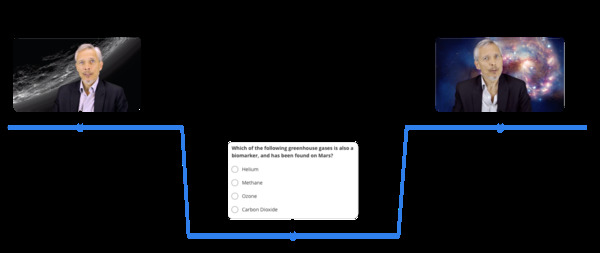
This is what we want: Narrative connection through video with low friction mnemonic mechanisms interspersed at key learning moments.
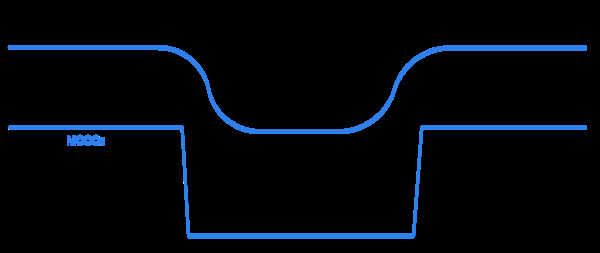
Here is an example of a video with embedded spaced repetition.
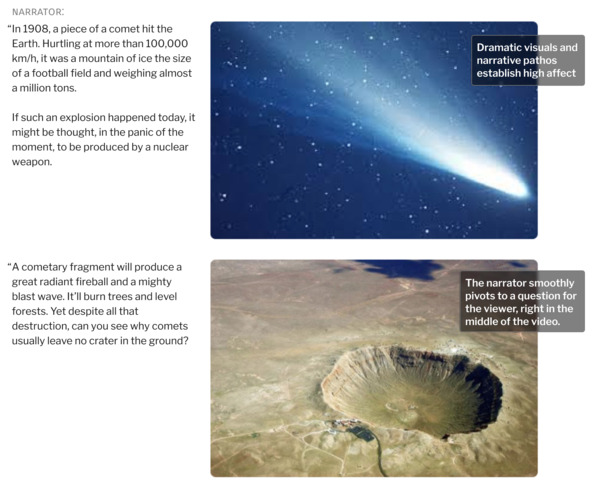
There is still an opportunity for creating thinking tools.
!time:00:34 watch later #read https://numinous.productions/ttft/assets/Cook2008.pdf
!time:06:05 saves my timestamp spot for resuming later
[[learning]]
I need to keep this thread around.
@metamitya how do you write notes?
I use obsidian to make connections and visualize them. Tags make finding files easier too.
https://obsidian.md/