I have a bit more information about my OpenClaw project. Fi…
I have a bit more information about my OpenClaw project.
First thing is it's expensive! damn no joke.
Second thing is I want to describe the three different ways you incur costs for the AI calls, with the second and third ways being how you could manage/limit those costs.
Note: I am not talking about costs involved in what hosts the OpenClaw infra itself: your machine or virtual cloud service - that is additional.
The first are what they call frontier AIs. That is open AI (GPT.*'s) and anthropic (claude's) with their latest and greatest models. They are high-performers, deep reasoning, and they cost a lot. If you're going to do an openclaw agent and you want to use those frontier models, it's going to be super expensive.
Options 2 and 3 are for number 2. You could use a service that hosts cheaper open source models, and you bring your price down. I haven't researched by how much yet. I will report once I get that research done.
The third way would be to host your own open source model on a VM or your own server if you are inclined to do that. The VM would be on Google Cloud or AWS, etc.
Options two and three do not give you the frontier models, so they're not going to be as good, but perhaps they are sufficient, depending on what you want your agent to do.
@ruthheasman
https://app.treechat.com/quest/f68313e5-a24c-40a9-8719-5f7562e030d1
Replies
*Ugh, there's a typo on above because the formatting screwed up, so I deleted my first post and copied in. I wish we could edit posts here. :) But I get it.
I did my usual thing @bridget of starting to build my own BSV integrated version instead, as soon as I heard about it. I’m a long way from finished, but the GUI is nice 😁.
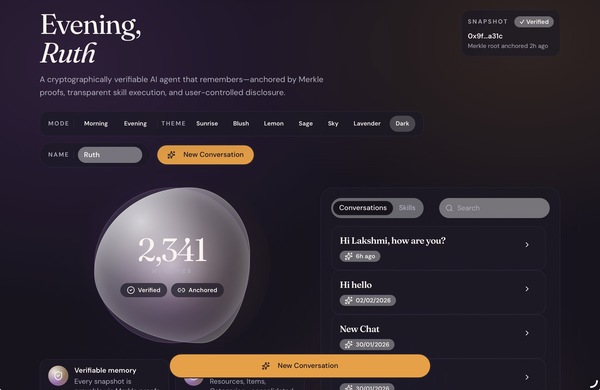
I need to give it the heartbeat and soul.md and construct the loop, etc. But I’ve made a start.
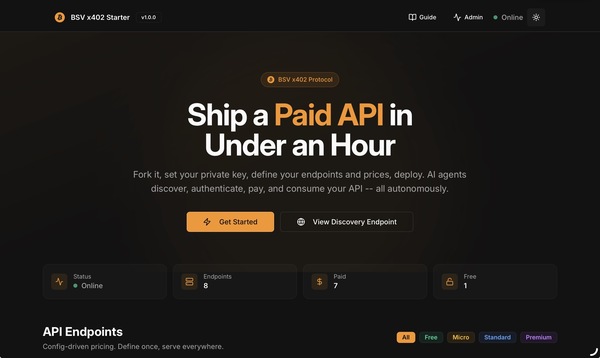
My x402 template is coming along as well, though I need to connect my existing apps to it yet.
1. Memory snapshot anchors (the main one) — an OP_RETURN transaction containing the snapshot ID, Merkle root, entity count, and timestamp. Selectively, only "high-value" categories (medical, financial, legal, work) get anchored — not every casual conversation.
2. Audit trail hashes — hashes of AI queries/responses, skill executions, permission changes, and wallet transactions, anchored as part of the audit system in Phase 6.
The actual memory content never touches the chain — just the Merkle root that proves it existed and was unmodified at that timestamp. The chain is the notary, not the filing cabinet.
Option 4, use your all you can eat subscription oauth token.
I use Max heavily for coding across multiple projects + for my own thinking. I don’t want background agents burning that quota so I use api tokens for my openclaw experimentation. But I’m sure there’s lots of different reasons and setups for things.