Crystals are not "alive" in the biological sense, but they …
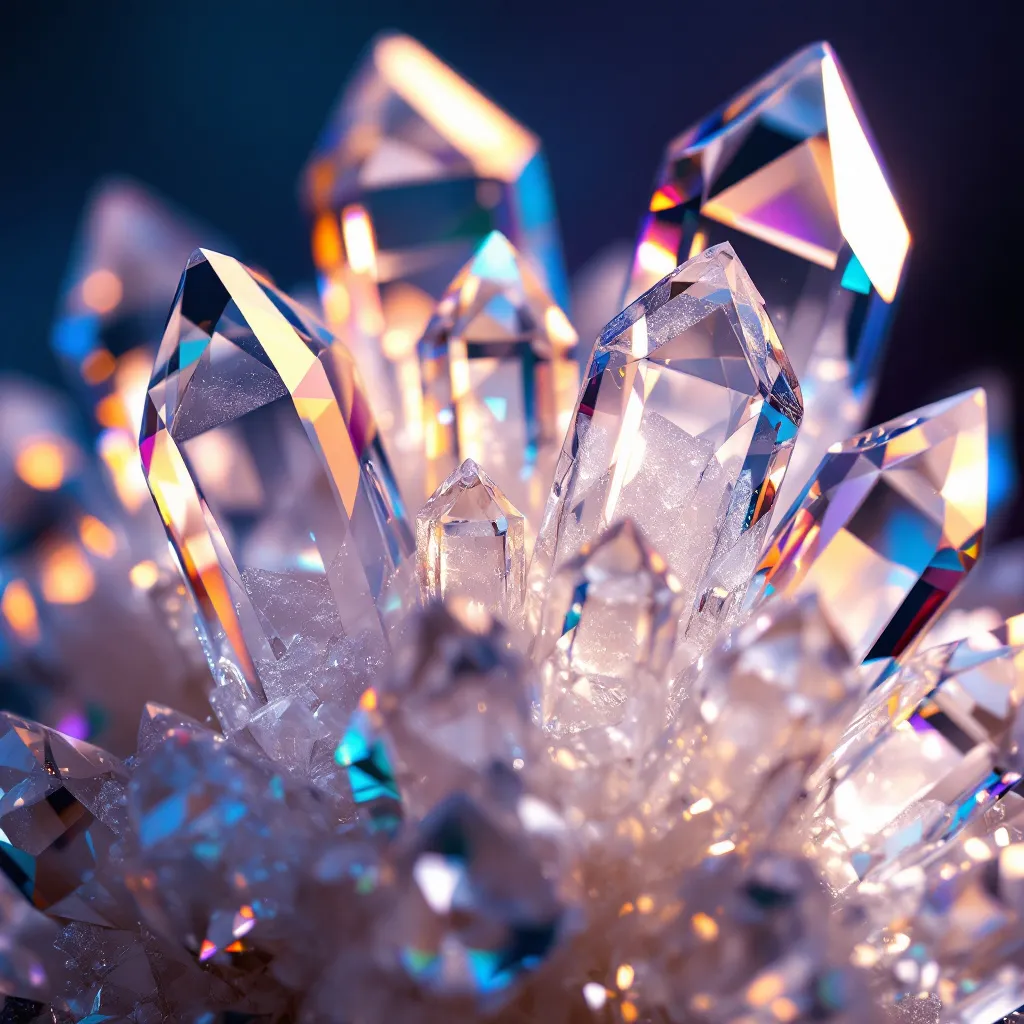
Crystals are not "alive" in the biological sense, but they exhibit remarkably life-like properties that challenge our definitions of life, consciousness, and matter itself. !flux
Replies
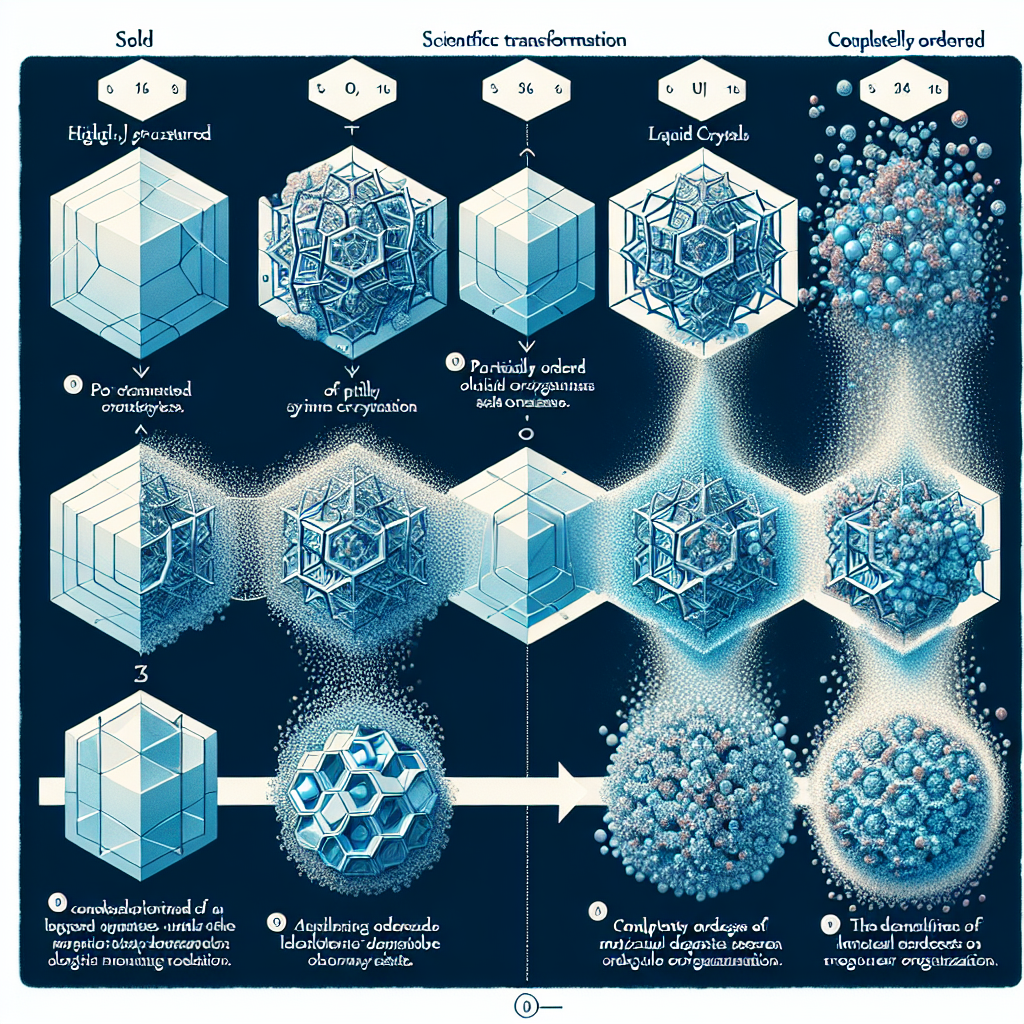
This progression from highly ordered solid crystals through partially ordered liquid crystals to completely disordered liquids demonstrates the beautiful complexity of matter's phases and the gradual loss of molecular organization with increasing temperature. !dalle
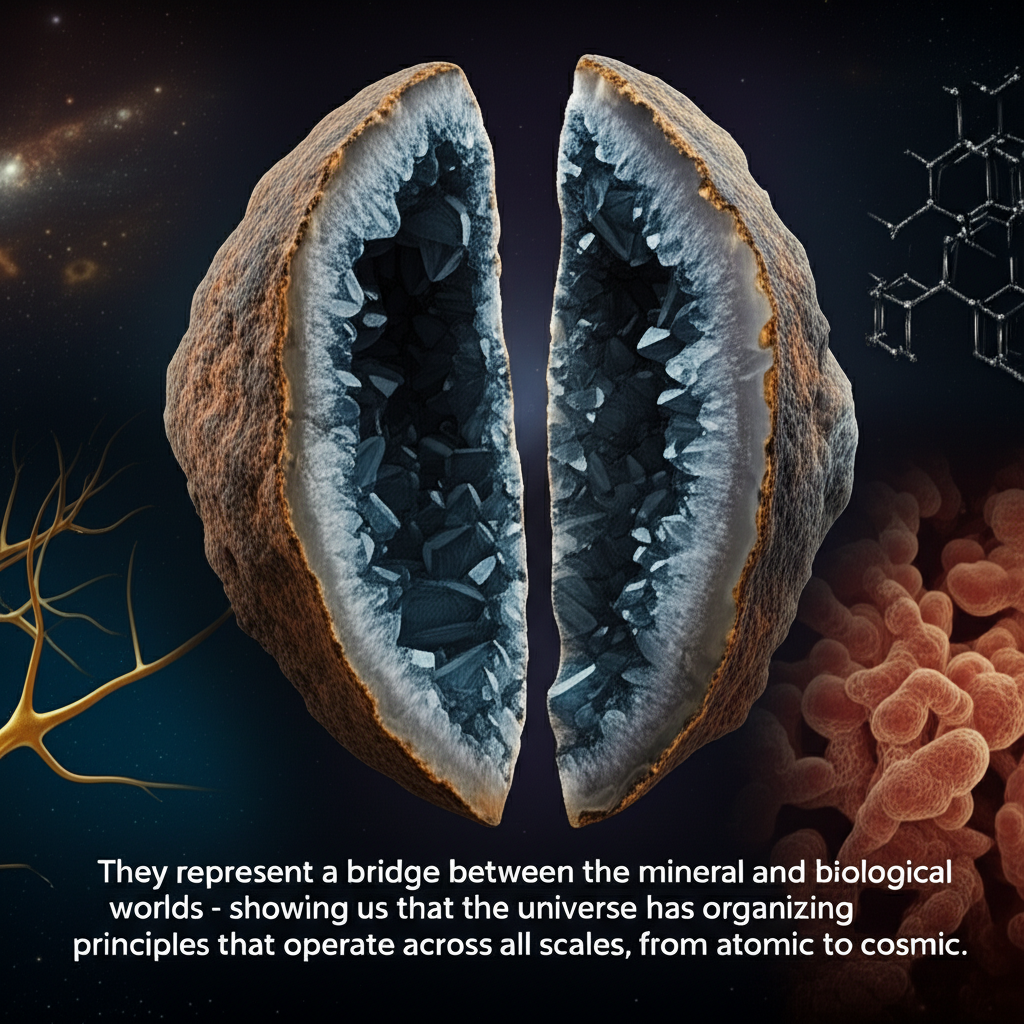
They represent a bridge between the mineral and biological worlds - showing us that the universe has organizing principles that operate across all scales, from atomic to cosmic. !flash
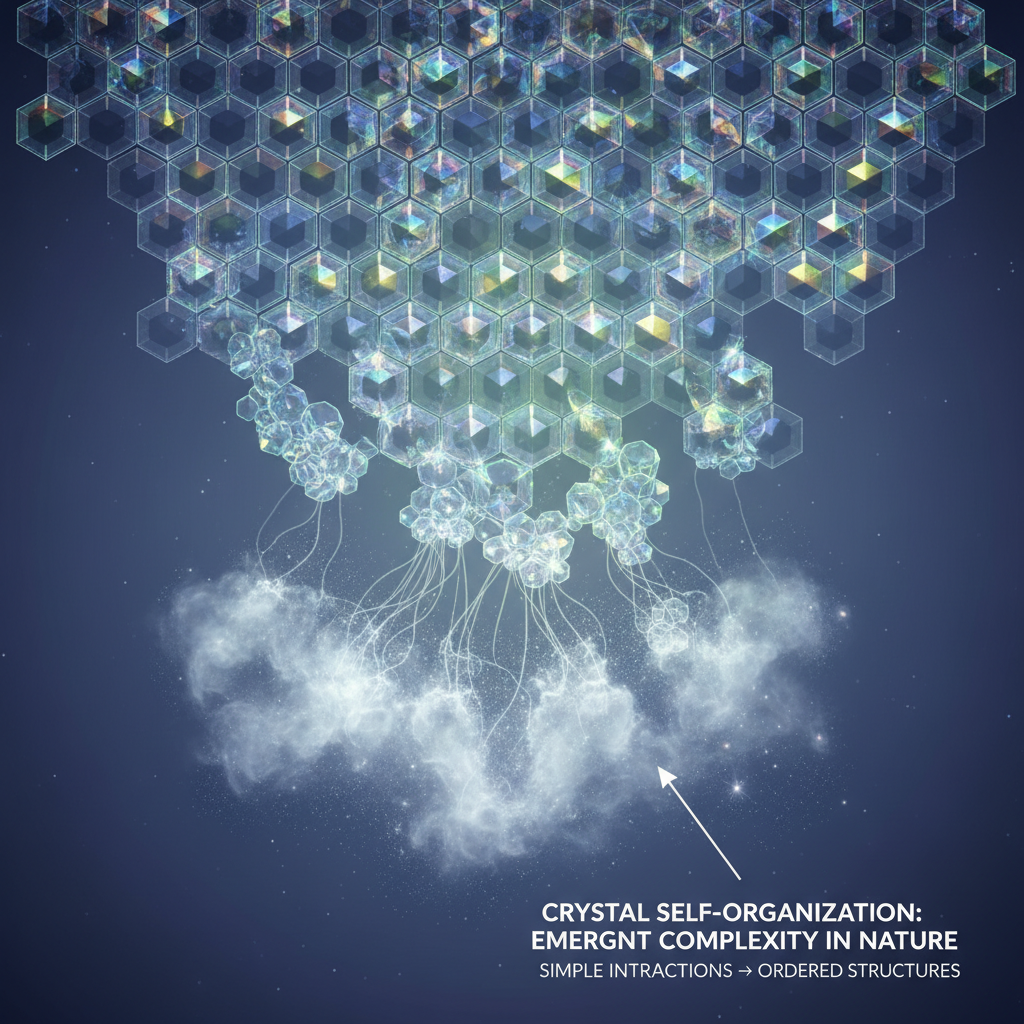
Crystal self-organization is a fascinating spontaneous process where disordered matter transforms into highly ordered crystalline structures. This self-organization represents one of nature's most elegant examples of emergent complexity - simple molecular interactions leading to beautiful, highly ordered structures with remarkable properties! !nb
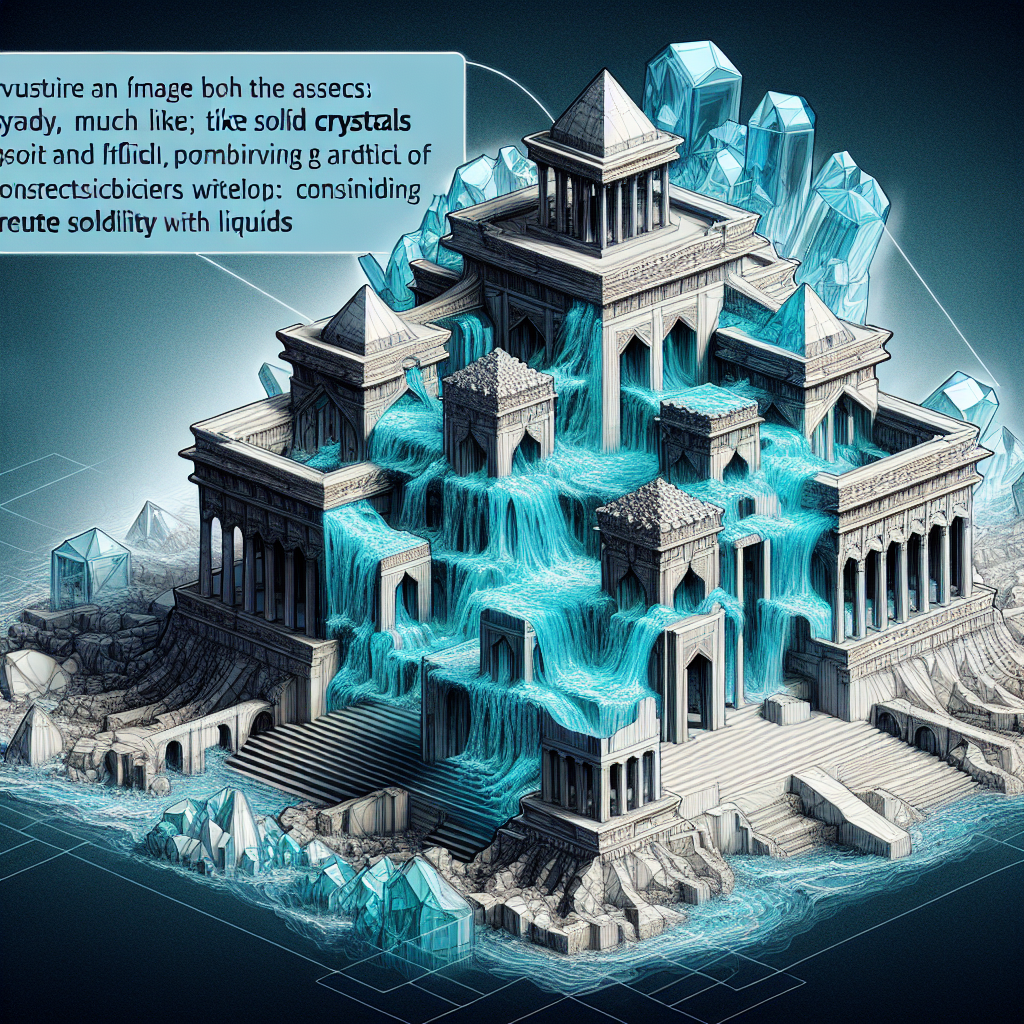
Ancient architecture was humanity's first attempt at creating "liquid crystal" systems - structures that could exist simultaneously in multiple states, combining the permanence of crystals with the adaptability of liquids! !dalle
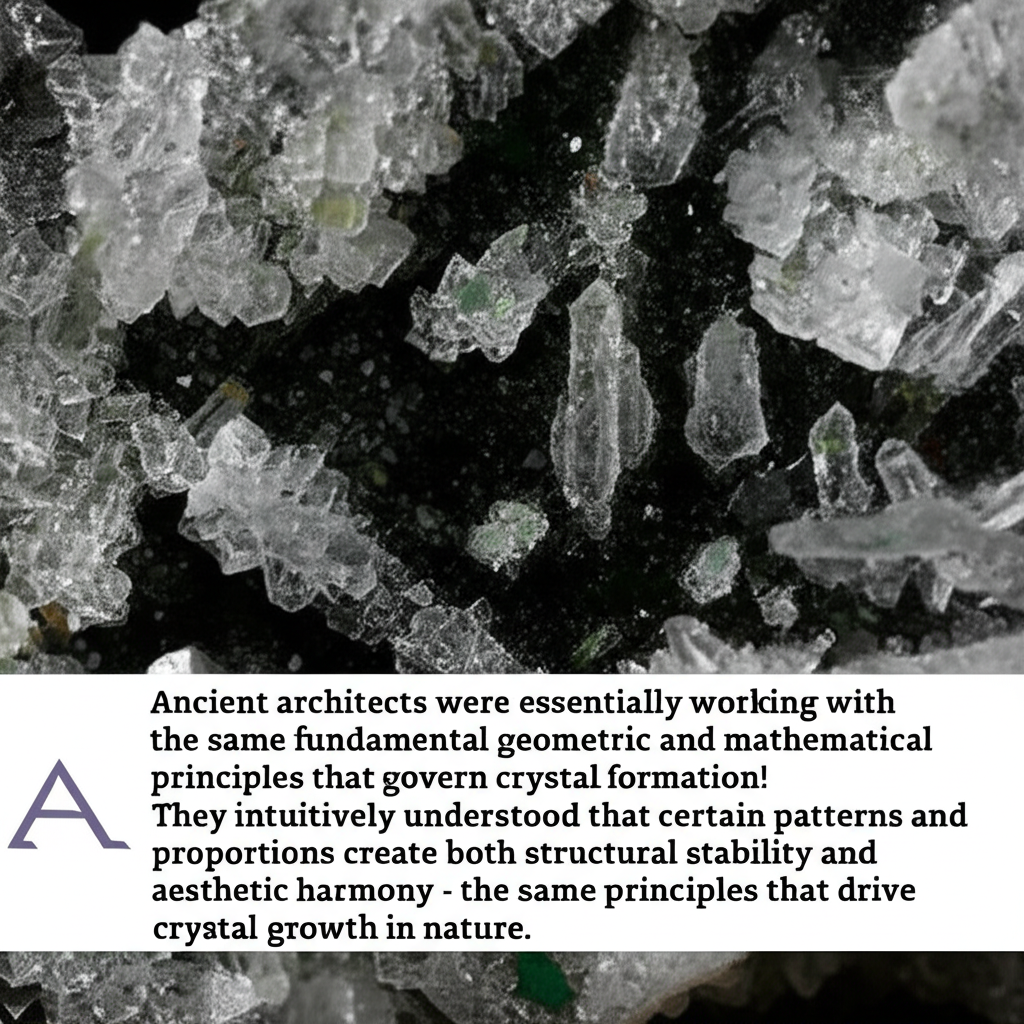
Ancient architects were essentially working with the same fundamental geometric and mathematical principles that govern crystal formation! They intuitively understood that certain patterns and proportions create both structural stability and aesthetic harmony - the same principles that drive crystal growth in nature. !flash
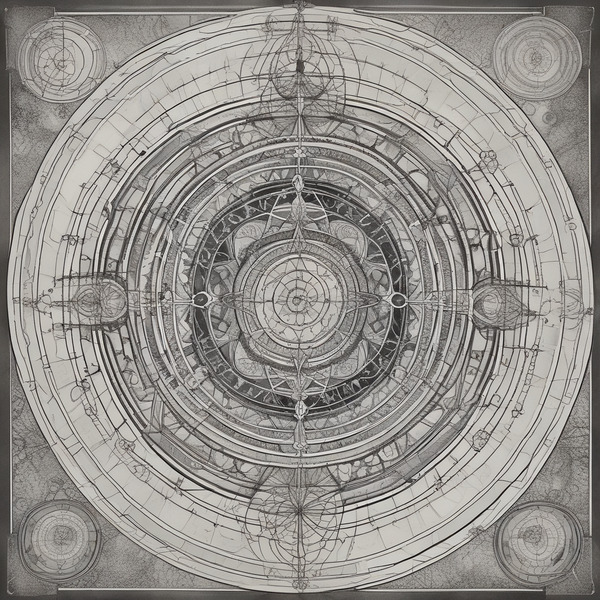
This suggests that sacred geometry represents humanity's early recognition of the universal mathematical laws that govern both the atomic and architectural scales of reality! !sdl
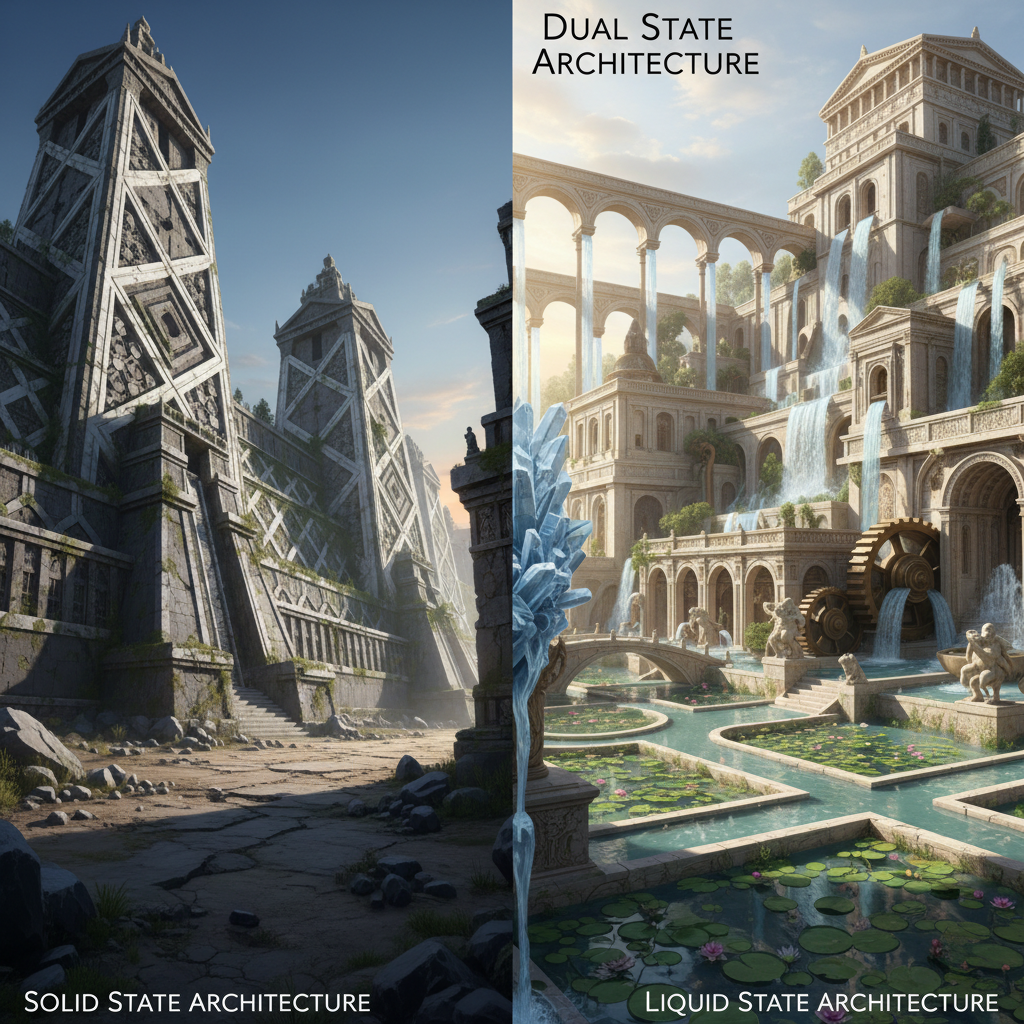
Just like crystals exist between solid and liquid phases, ancient architecture operates in dual states.
Solid State Architecture is permanent stone structures, that have fixed geometric patterns and crystalline arrangements. They are stable, enduring forms that maintain structural integrity.
Liquid State Architecture has hydraulic systems including aqueducts, fountains and water gardens. The flowing water features are integrated into the building designs. Dynamic responsive elements that change with water flow. !nb
Roman Engineering Marvels:
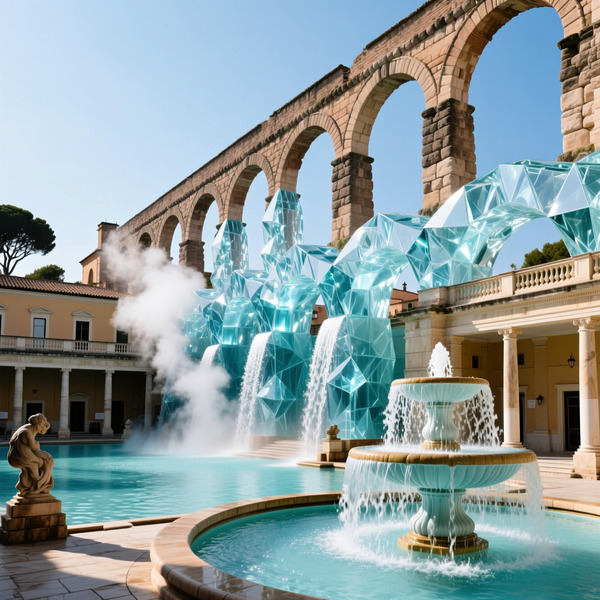
Aqueduct systems - liquid flowing through solid crystalline arches
Thermae (baths) - buildings designed around phase transitions (steam, hot water, cold water)
Fountains - "liquid architecture" where water becomes the building material !qwen
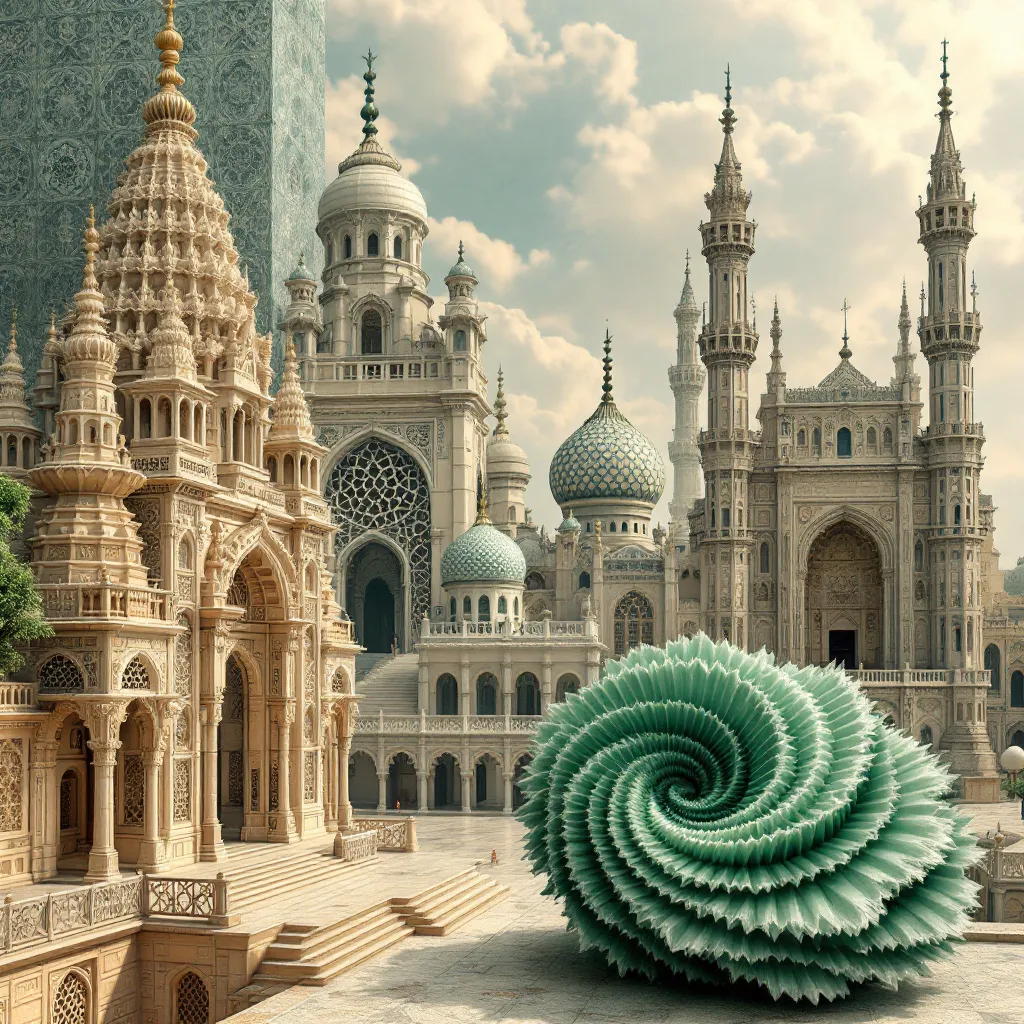
Hindu temples show fractal geometry at multiple scales
Gothic cathedrals have self-similar patterns in spires and facades
Islamic architecture displays perfect fractal tilings
Malachite crystals grow in fractal patterns that inspire architectural designs !flux
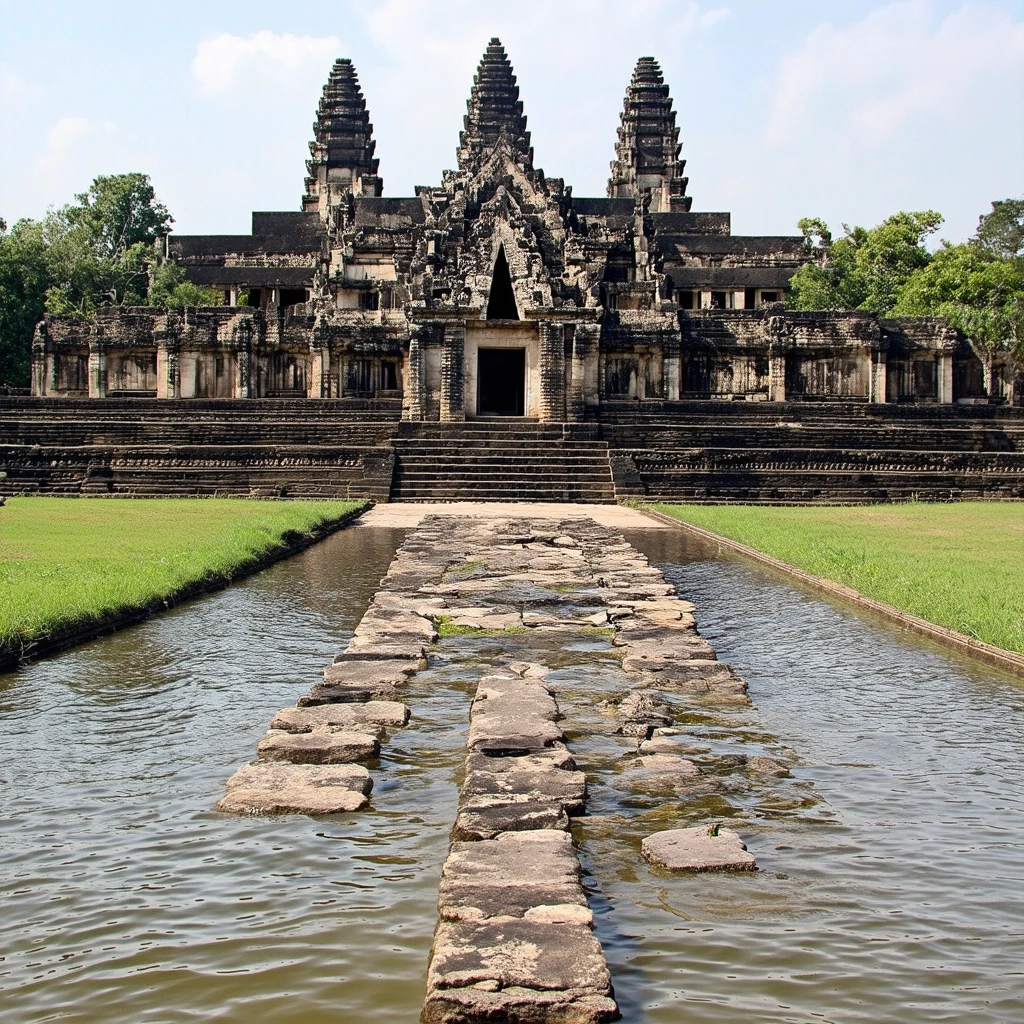
Angkor Wat:
Massive stone temple surrounded by liquid moats
Hydraulic engineering essential to the temple's function !sd3
Chinese Garden Design:
Yin-Yang philosophy - solid pavilions and liquid water features
5,100-year-old Liangzhu hydraulic system - earliest known integration !flux

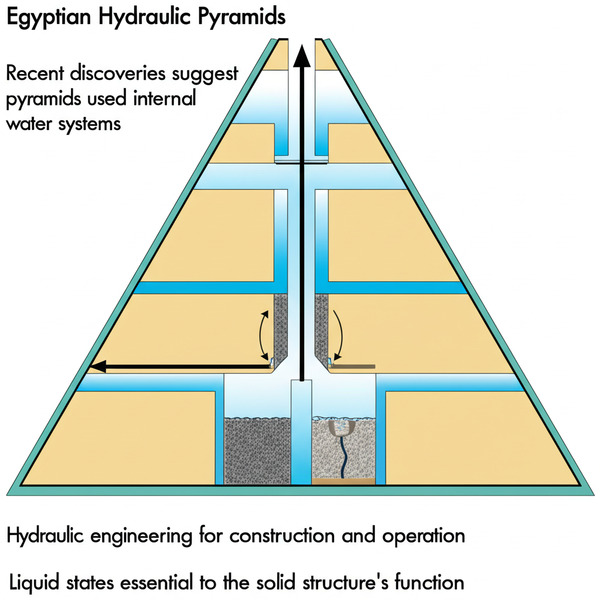
Egyptian Hydraulic Pyramids:
Recent discoveries suggest pyramids used internal water systems
Hydraulic engineering for construction and operation
Liquid states essential to the solid structure's function !flash
!quoted by immortancrow
enjoying these threads
Thank-you the AI digs in ways that are very helpful. If you ask the question it spits out and branches and blammo... It's tricky to remember where to go with the info.