## The Classroom and the Curriculum --- Before the child ca…
## The Classroom and the Curriculum
---
Before the child can question the world, the world must shape the child. Religion provided the first architecture of obedience. Industry provided the economic incentive. Banking provided the mechanism of debt. Science provided the boundary of acceptable thought. But none of these systems would function across generations without a delivery mechanism — a process by which each new cohort of human beings could be reliably conditioned to accept the architecture as normal, necessary and unchallengeable.
That mechanism is the education system.
---
### The Prussian Blueprint
The modern school system did not evolve organically from a desire to enlighten the population. It was designed — deliberately, structurally and with a specific purpose — in Prussia in the early nineteenth century. Following Prussia's humiliating defeat by Napoleon at the Battle of Jena in 1806, the Prussian state undertook a comprehensive reform of its educational system. The objective was not to produce thinkers. It was to produce obedient citizens, reliable soldiers and productive workers — a population that would follow orders, accept hierarchy and serve the state without excessive independent thought.
The Prussian model introduced the features that remain the foundation of schooling across the Western world to this day:
- Compulsory attendance — enforced by law. The child does not choose to be educated. The state requires it. The parent who resists faces legal consequences.
- Age-based segregation — children grouped by birth year rather than ability, interest or developmental stage. The individual is subordinated to the cohort.
- Standardised curricula — a fixed body of knowledge, determined not by the student but by the state, delivered uniformly to all. The teacher reads from a syllabus designed by someone further up the chain of command. The student absorbs what they are given. The question of who decided this was the truth to be learned — and why — is never raised.
- Bell-driven scheduling — the school day divided into rigid time blocks, signalled by bells. The child moves when the bell rings. Eats when the bell rings. Stops when the bell rings. The bell is not a convenience. It is a conditioning tool — training the nervous system to respond to external authority rather than internal rhythm.
- Reward and punishment systems — gold stars, stickers, praise for compliance. Detention, suspension, exclusion for deviation. The child learns, before they can articulate it, that obedience is rewarded and independence is punished.
This model was not confined to Prussia. It was exported — adopted by the United States in the mid-nineteenth century (influenced heavily by Horace Mann's advocacy after visiting Prussian schools), and subsequently spread through the British Empire and beyond. By the twentieth century, the Prussian model had become the global default. Virtually every child in the industrialised world was educated within a system designed, at its root, to produce compliance.
John Taylor Gatto — a former New York State Teacher of the Year who spent thirty years in the classroom before becoming one of the most articulate critics of the system he had served — wrote extensively on this subject. In Dumbing Us Down and The Underground History of American Education, Gatto documented how the institutional school system was never intended to educate in any meaningful sense. It was intended to sort, condition and manage. His central observation: the school system does not fail. It succeeds — at precisely what it was designed to do.
---
### The Factory Floor in Miniature
The reader should pause and consider the structure of the school day — not as an abstract system, but as a lived experience.
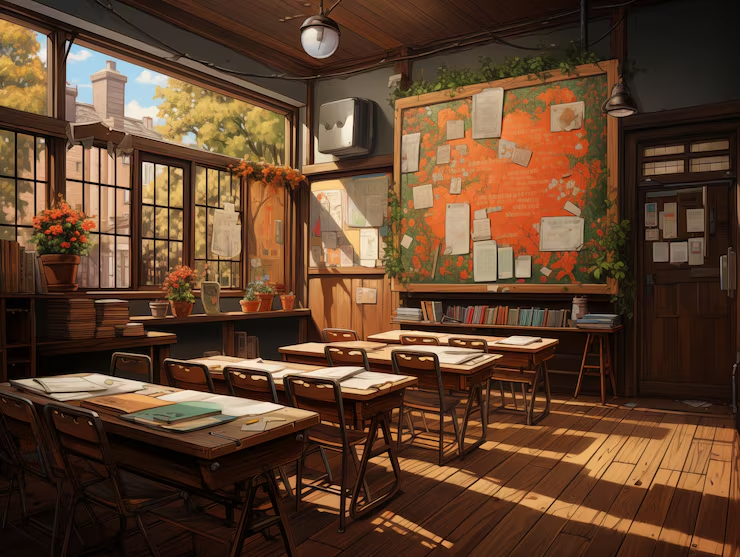
A child is removed from their family — daily, for the majority of their waking hours, for the majority of their formative years. They are placed in a room with twenty to thirty other children of the same age. They sit in rows. They face the front. An authority figure stands before them and delivers information. The information is not negotiated. It is not discussed. It is transmitted. The child's role is to receive, remember and reproduce it — accurately, on demand, under timed conditions.
Break is at the same time. Lunch is at the same time. The day ends at the same time. Permission is required to speak. Permission is required to leave the room. The schedule is not the child's. The space is not the child's. The content is not the child's. The only thing that belongs to the child is the obligation to comply.
Now consider the modern workplace. You arrive on time. Your break is at the same time. You leave at the same time. You perform the tasks assigned to you. You are assessed periodically. Good performance is rewarded with bonuses — the adult equivalent of gold stars. Poor performance is met with warnings, disciplinary action and, ultimately, dismissal — the adult equivalent of detention and exclusion.
The correspondenc…