Hello everyone, wanted to share a bit about my interest in …
Hello everyone, wanted to share a bit about my interest in the 4th dimension. Let me know if there's anything specific you want to know.
Here's a little bit of an overview, why I'm interested, why I think it's related to bitcoin and how it intersects with our every day lives.
Replies
The 4th dimension, in the context that I'm using it, doesn't have to do with "time." This is the most common way it gets described. How I'm using the context is that this is a 4th spatial dimension.
This dimension exists mathematically, although not physically.
The 4th dimension was used as a plot device in a story called, "He Built a Crooked House." You can read that story here: https://homepages.math.uic.edu/~kauffman/CrookedHouse.pdf
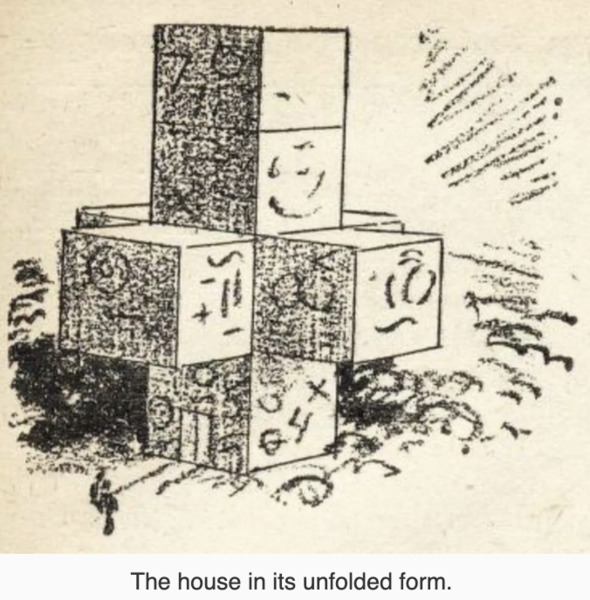
This story was originally published in 1941, and it ultimately inspired Carl Sagan who described it as a beautiful example of science fiction presenting new conceptual models to a mainstream audience in a way that oriented them to deep truths about the universe which they were nevertheless unaware of...
Carl Sagan goes on to describe a conceptual model for this 4th dimension here: https://www.youtube.com/watch?v=UnURElCzGc0
In addition to Carl Sagan's useful description above, Neil DeGrasse Tyson also provides some context around the structure of some of the 4th dimensions models using an analogy not only to what the object is, but by that which it is bounded by. Rather than me repeat Neil's comments, you can watch them yourself here: https://www.youtube.com/watch?v=veXBK2Mfujk
Neil's description is useful because it doesn't just go into what the object is, but how we could define it by what it's bounded by. This in part introduces the concept of something called Nets, and this video gives a detailed explanation about what "nets" are with respect to higher-dimensional objects, and shows some examples in both three dimensions as well as four dimensions for the concept of "nets." https://www.youtube.com/watch?v=Yq3P-LhlcQo
One of the concepts I encountered when looking into the 4th dimension is this concept of a "hyperplane." A hyperplane is defined as a plane of the dimension n-1 where dimension n is the dimension of the object. In other words, a square is a hyperplane of the cube. A cube is a hyperplane of the tesseract, etc. I eventually found this video which posits that all motion is hyperplane reflection: https://www.youtube.com/watch?v=1uGKwVGeeJM
One of the reasons why a 4th dimensional object is impossible to behold in our traditional material world is because each plane would need to be orthogonal to every other plane. We run out of orthogonal space after 3-dimensions, i.e. X-axis, Y-axis and Z-axis.
But one thing that the above video started me to consider is what if the 4th orthogonal direction IS a reflection of another dimension. In other words, you could have X₁, Y₁, Z₁ and you could have the reflection of X₁ which we could call X₂. This would satisfy the need to have a 4th orthogonal plane without the need to bend it beyond our traditional space/time.
https://www.youtube.com/watch?v=mceaM2_zQd8
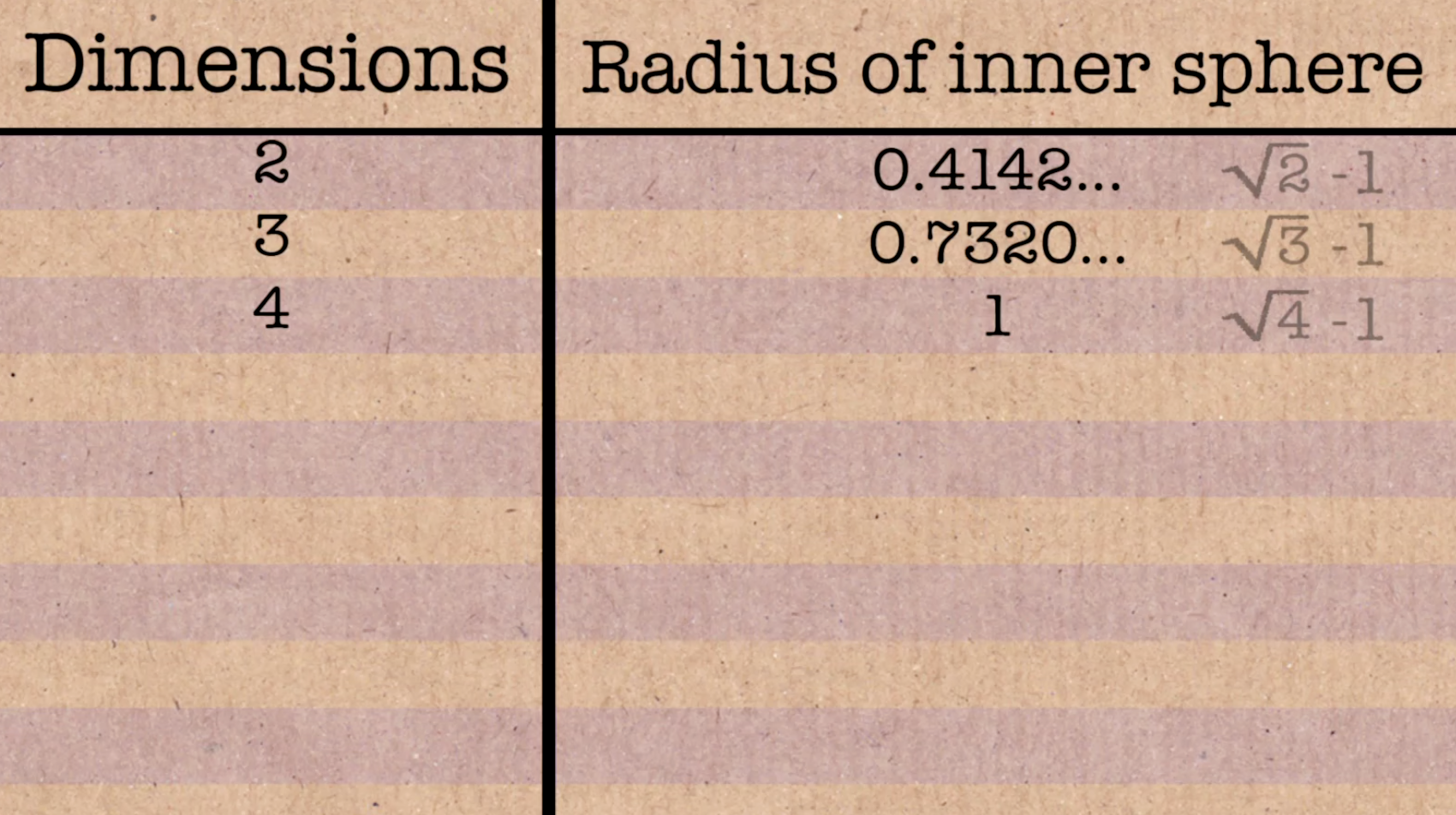
The above video about Spheres in Higher Dimensions helps to illustrate this concept of hyperplane reflection representing "motion." In the above video, math influencer, Matt Parker, author of a book of fun things to do in the 4th dimension, describes the Pythagorean Theorem generalizes to any number of dimensions. So regardless of which dimension you're in, add up all the orthogonal directions and take the square root of them, and that's the length of the new unit.
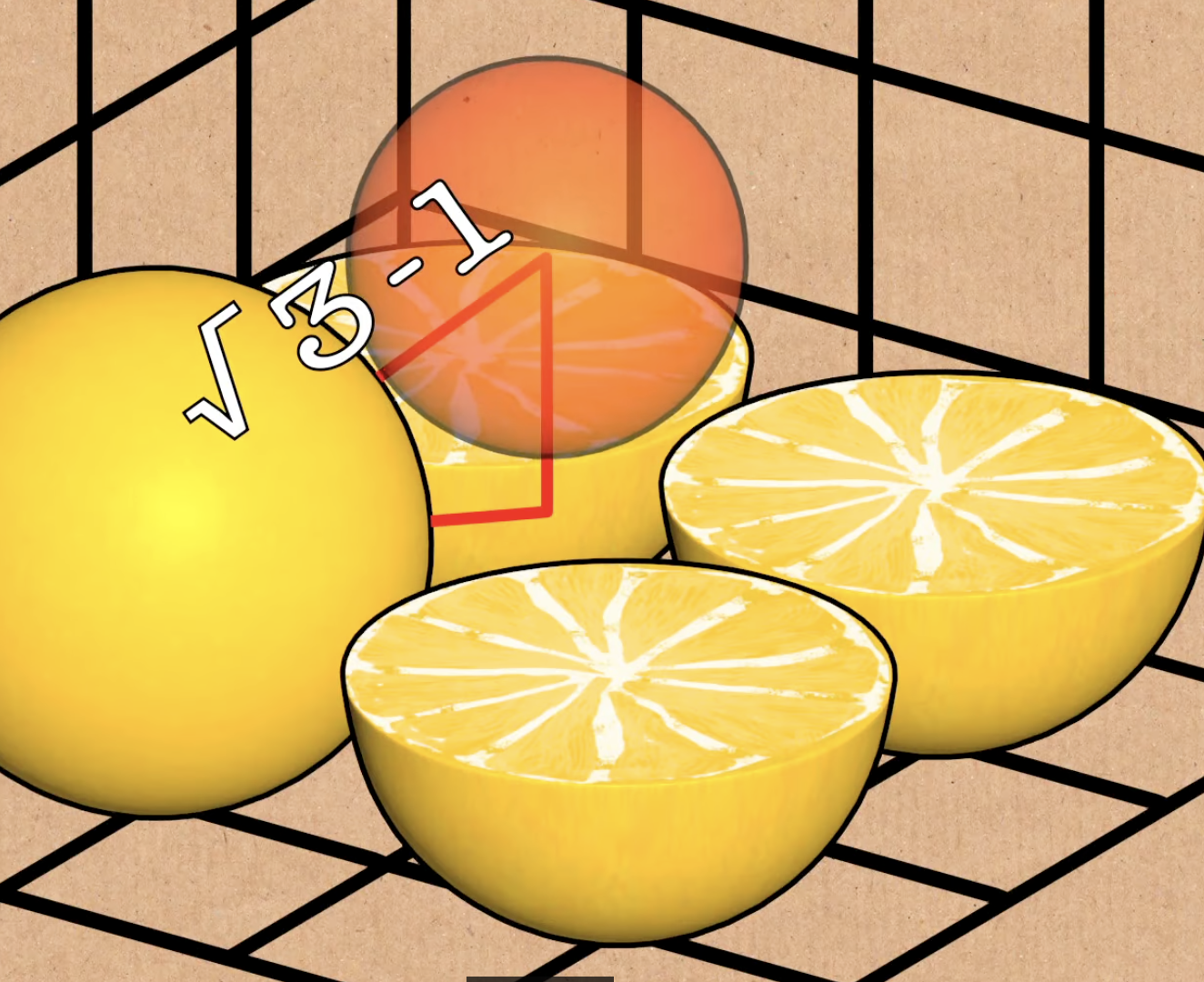
You need to watch the video described above to understand what he's talking about in this analysis, but what's interesting is that when you arrive at 4 dimensions, the space between the "padding spheres" becomes equal to the size of an additional padding sphere. This is because the when you take the square root of four orthogonal directions, aka, 1+1+1+1=4 and take its square root, you get 2, and then subtracting the original length of 1 from the original padding sphere, you get 1. If you think about this, that is a conceptual model for the argument in the above video that "all motion is hyperplane reflection." And it could be argued that the new "void space" of the original sphere is just the same sphere itself but having "moved" its location via reflection.
Does that make sense? I'm not claiming this is true, I'm just saying there is an argument for that using this math.
I'll take a second to unwind from higher-dimensional modeling and instead turn attention to the third dimension. There are a lot of magical and wonderful things about this third dimension and they relate in ways to things we encounter in the 4th, so let's look at them for a second. One of my favorite lectures is this one by Randall Carlson talking about Sacred Numbers in both time and space. This is worth an entire watch: https://www.youtube.com/watch?v=R7oyZGW99os
He shares a lot of powerful information about cycles of time and the platonic solids and ways that these overlap or intersect.
These "platonic solids" are also called regular polyhedrons meaning that all of their faces, vertexes and angles are identical. These shapes also appear in the 4th dimension, albeit, there is a unique difference in how they show up. In the 4th dimension, these are called "Polychorons" or polytopes. https://en.wikipedia.org/wiki/4-polytope
What's interesting about these is that in 4 dimensions, we actually get 6 of these unique structures.
Each of these structures corresponds to an equivalent polyhedron in the dimension below it. For example, the most famous of these is the 8-Cell or Tesseract which is the 4d equivalent of the 3d cube.
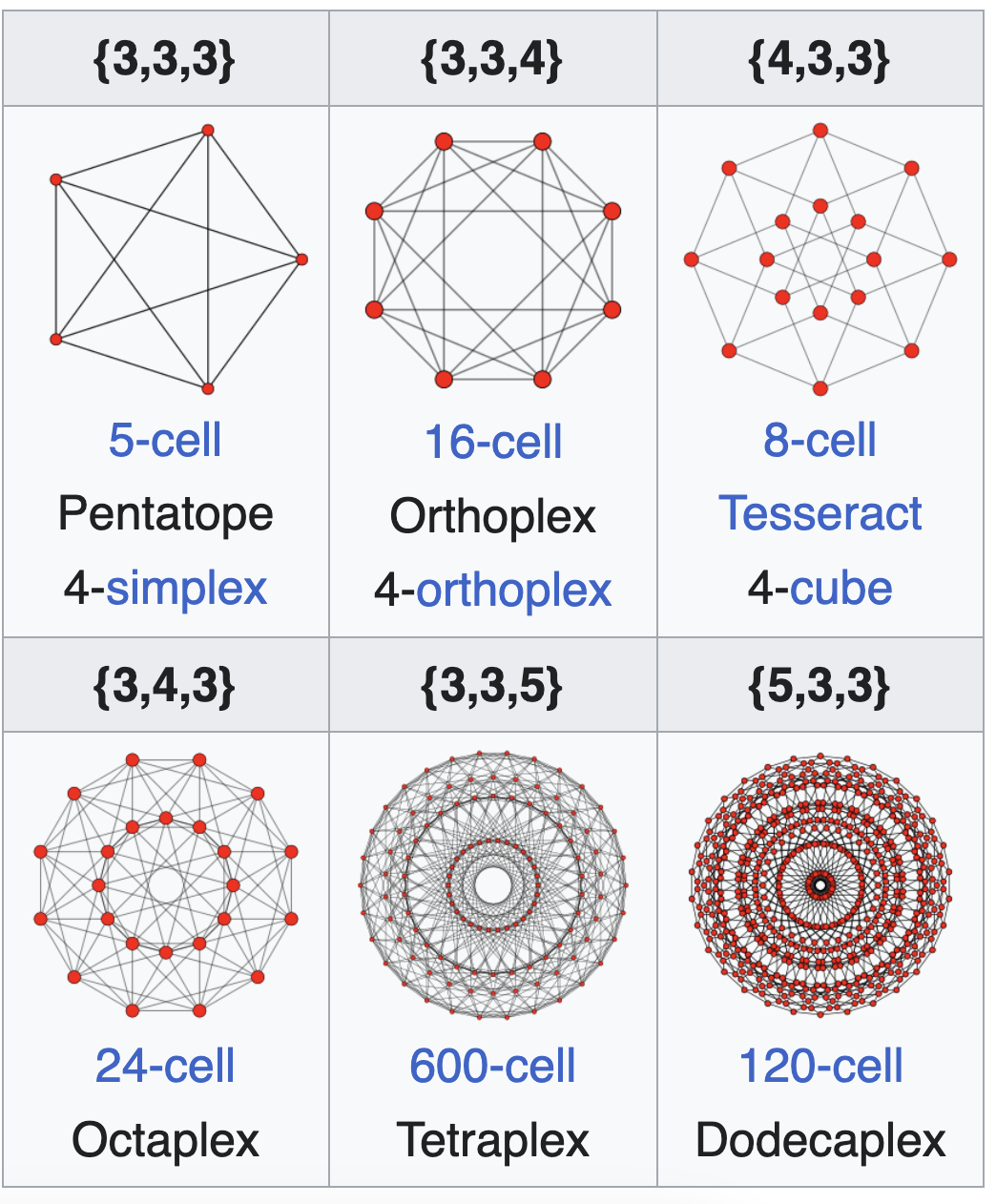
There are parallels between these higher dimensional structures and network topologies because the "nets" of these structures can be considered unique configurations of network nodes in terms of their connective pathways to each other in such a way as a "closed system" can form... They have high degrees of flexibility in terms of which nodes are connected to which while still retaining the ultimate integrity of the higher structure. This is described a bit in Matt Parker's video on "unfolding the 4d cube."
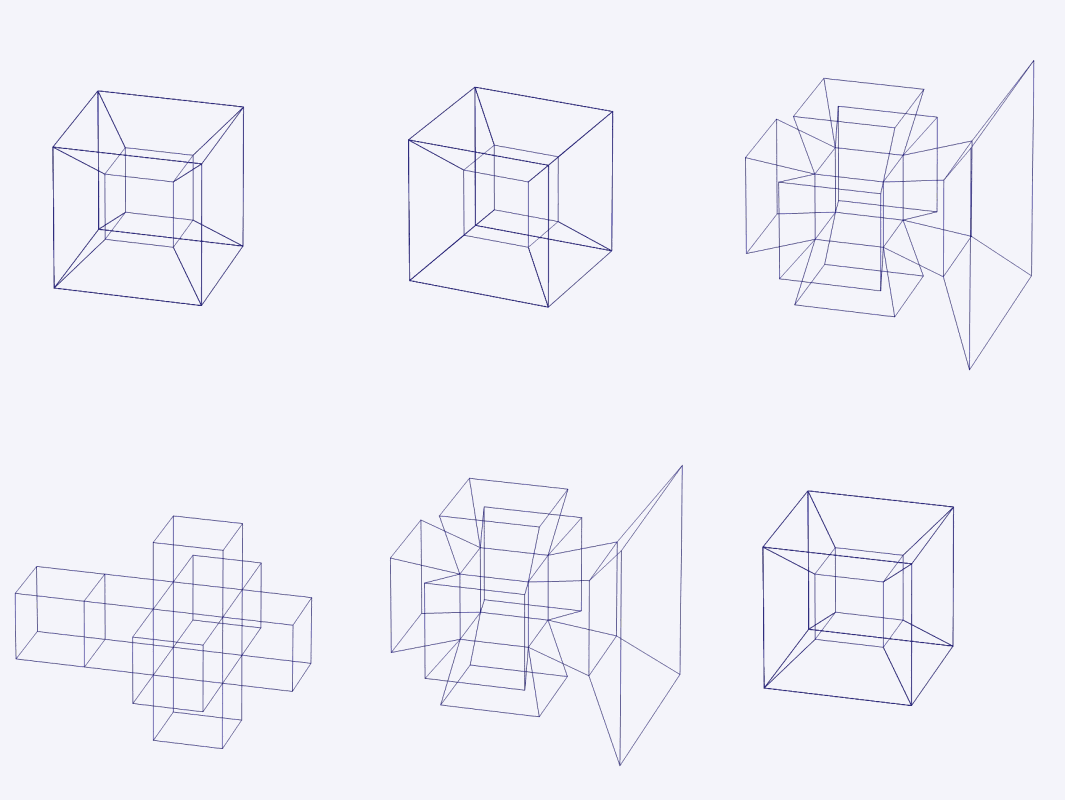
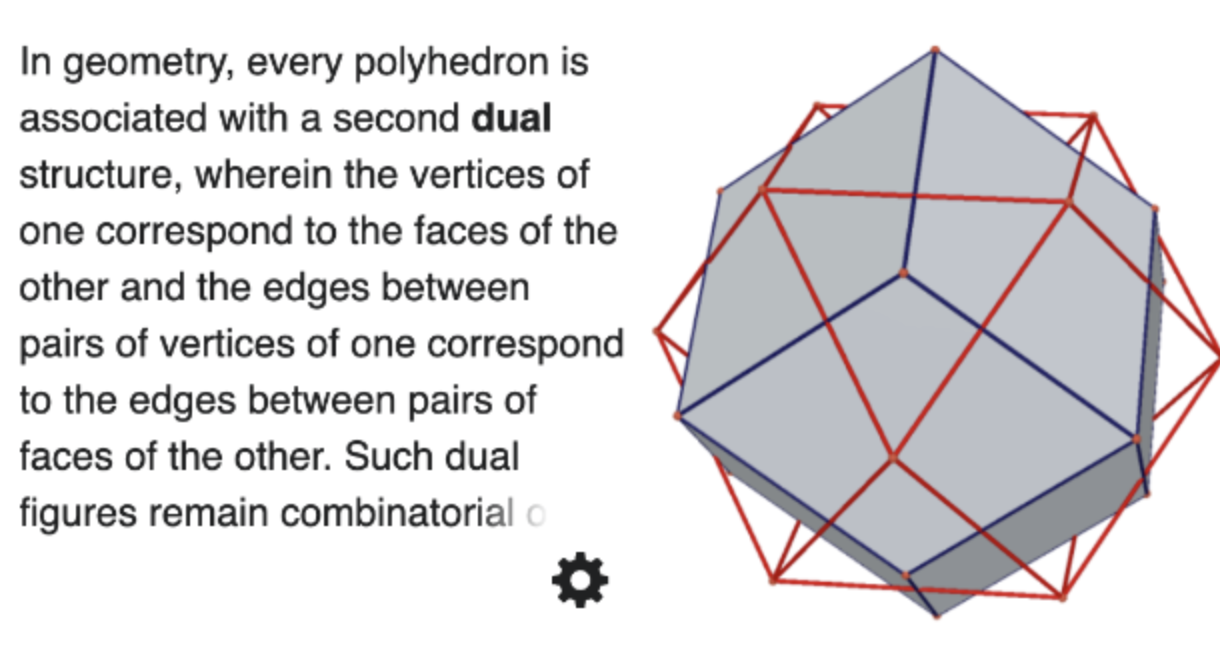
In the 4th dimension, the 6th platonic solid is the 4th dimensional equivaelnt of the inverse of the traditional 3d cube. When you invert a normal cube, you form a shape called the "Rombicdodecahedron." And it's almost but not quite a platonic solid in 3d. This is because in 3d, a compression occurs in the ridegpole diamond faces and creates a pattern where the legnth from north to south is 1 and the length east to west is the square root of 2. https://www.youtube.com/watch?v=oJ7uOj2LRso
The dual-polyhedra of this inverse-cube is also known as the Vector Equilibrium. The Vector Equilibrium is important to my interpretation and analysis of the significance of the 4th dimension. In some ways, it is like a link or a bridge to it. Here, below in the image, you can see the vector equilibrium which is hollow and built of red lines along with its 3d dual, the rombic dodecahedron made with gray faces and blue lines. Only in 4 dimensions does it get to be "regular."
Buckminster Fuller's description of the vector equilibrium is something to really spend time on and consider. He makes bold claims. He says that this form, the V.E., represents the highest field for a form of unity. In other words, beyond this form, you cannot hold more in a single field, and instead you'd necessitate to divide. So you could imagine that this form represents the Zygote, the fertilized egg, which initiates the cellular division process of embryogenesis.
https://www.youtube.com/watch?v=jcq_Hzo8PC8
Buckminster Fuller is truly a brilliant and innovative thinker in terms of how to define and classify the experiences of the human condition. Here's a little bit of info on who Buckminster Fuller is and what his ideas attempt to explore.
https://www.youtube.com/watch?v=81ov7eDy52c
If you want to explore deeply Bucky's ideas about how to measure time and space, I also recommend this video. He shares a lot of in-depth details in his descriptions of simple and ordinary events in such a way as to provide a lot of clarity around geometry, spatial relationships, complex structures, etc.
This is one of the best videos on the internet. The event is hosted by Werner Erhard, founder of EST, and someone whose leadership training I myself have been modeled after in my own formative training programs.
https://www.youtube.com/watch?v=SNSmhkPPEsQ
I'll try to wrap this up in only a few more posts and I'll relate this all to bitcoin, but first I'll just share some of my own story. I started a martial arts discipline at age 18, and this profoundly altered my perspective on life. My teacher was a student of a program called Landmark Forum, and this program is an extension of the EST program that Erhard led. I became deeply involved in supporting individuals working through this leadership training as a volunteer.
My initial training was led by a dynamic and visionary influencer named Jeff Willmore.
Pic related.

Truly dumbfounded by what I was learning on multiple fronts, my martial arts discipline, the Zen and Eastern undertones of kung fu as well as this leadership training which engendered new models for thinking, I found myself on a journey of voluntary silence for one year. During this year, I encountered many indescribeable elements to both myself and the world around me. When I started speaking again, I found very little capacity with my peers to relate with anything I was describing. Eventually, I found this relatability with an individual named Ken Wilber. Here he is in one of my favorite discussions describing the nature of the subject and the object.
https://www.youtube.com/watch?v=NQ_HsQkBkJA
I was raised with a Christian upbringing in a Catholic household, and the wide-range of Ken's influences, from Christian mysticism to Anthony Robbins to countless others intrigued me. I tried for a long time to understand Ken's ideas but I never could fully grasp them. Instead, I listened to him because I thought he had brilliant guests. I could almost always relate much more to his guests than to him. I mostly tuned him out to be honest.
https://www.youtube.com/watch?v=kB1hAIwFAus
But then one day, I was on a long bus ride, and I read a full book by him called Integral Psychology. And this truly changed my entire life. When I arrived on the bus, it was like my hair was on fire. I had never read anyone who could articulate and speak to the things I'd experienced during my year of silence, but this book could. So I began to explore less about Ken's guests and more about his own models and ideas.
Eventually this led me to two Swiss Psychologists named Jean!... One was named Jean Piaget, https://www.youtube.com/watch?v=IhcgYgx7aAA
And the other one was named Jean Gebser.
Gebser wrote a book called The Ever Present Origin and in it, he argued that mankind has gone through several developmental leaps in its conscious-capacity both on the individual and on the cultural and social levels. He analogized these leaps in consciousness as being symbolically related to dimensional shifts in the complexity of spatial form.
https://www.youtube.com/shorts/PKAQaxKffnw
I found this really intriguing. He compared the period from 3000 BC to roughly 1400 AD as being synonymous with what he described as "man's two-dimensional model of thought." He pointed out that even the art is "flat" and lacks true depth as though mankind lacked the capacity to truly objectify the world around him. The dual-meanings to words like alto meaning both "high" and "low" in latin and the root of the word "devi-" from sanksrit forming both the roots of "devil" and also "divine" formed part of how he laid out his argument.
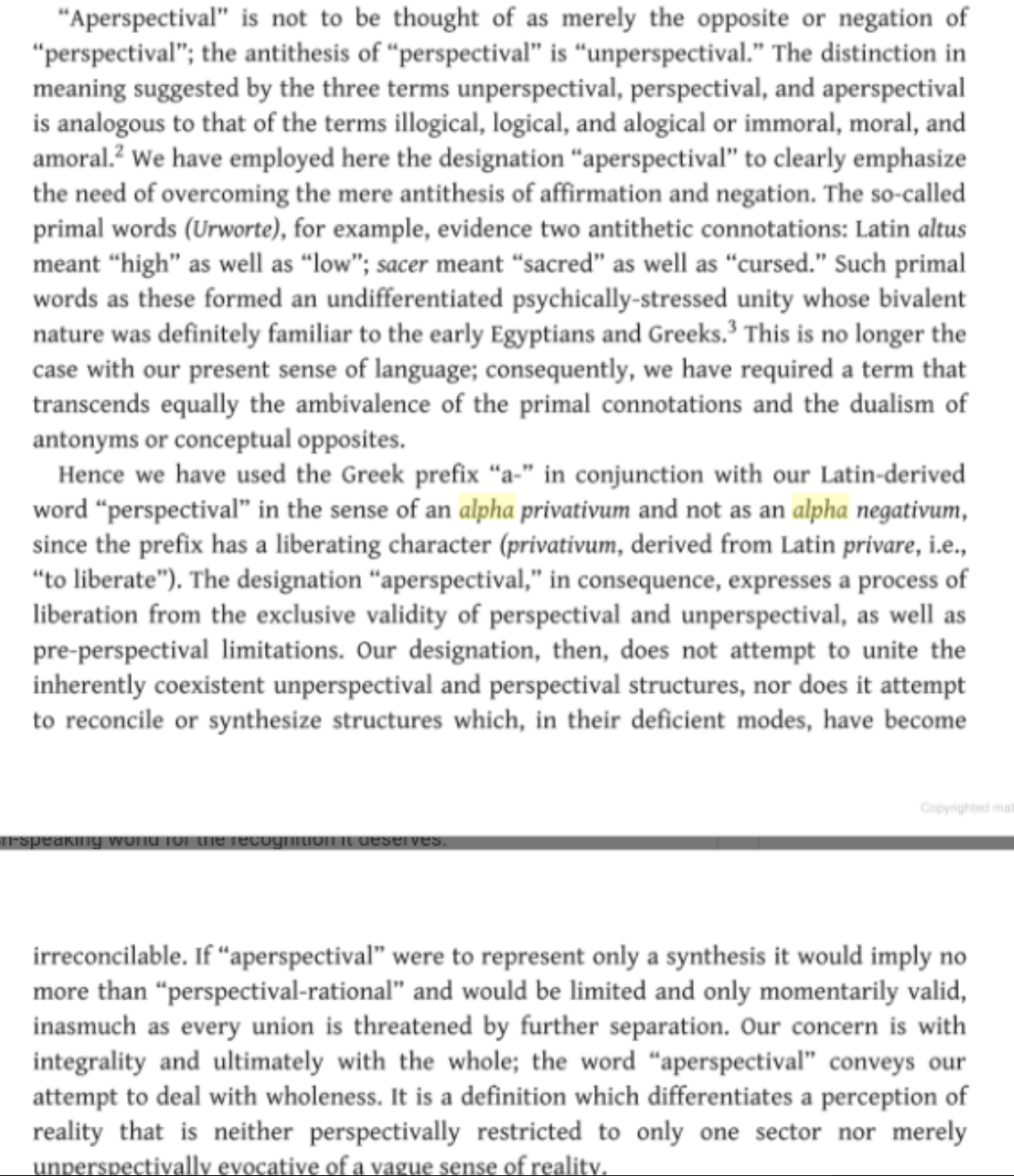
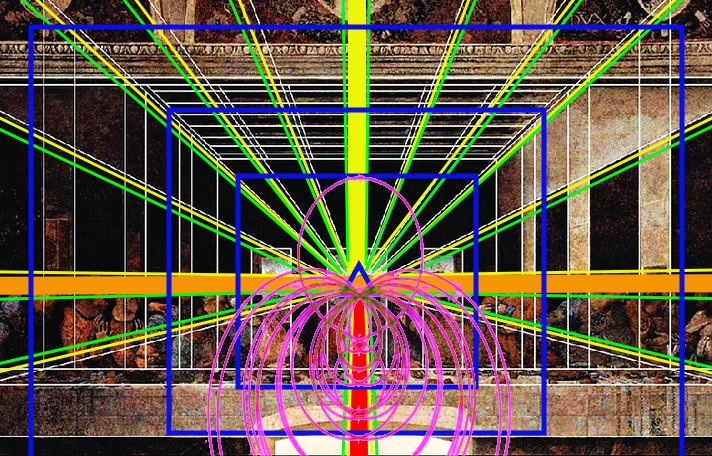
He argued that Leonardo Da Vinci's use of the vanishing point in his frescos as being the "origin" of the third dimension within man's mental modeling, and only after this point do we see the emergence of things like rationality, the scientific method, western liberalism, separation of church and state, etc. He links these to the transformation from a two-dimensional model to a three-dimensional model of interpreting the world. He also points out that this model introduces the concept of "dialectical opposites" to our understanding. Prior to this shift, there was a polarity but the polarity implied in a way a uniformity of substance. For example, the yin yang represents both the light and the dark, but these are not opposed but instead are complimenting forces which help to carve out and define each other and on whom each other depend. With the introduction of the third-dimension, you have for the first time, according to Gebser, the concept of the dialectical opposites.
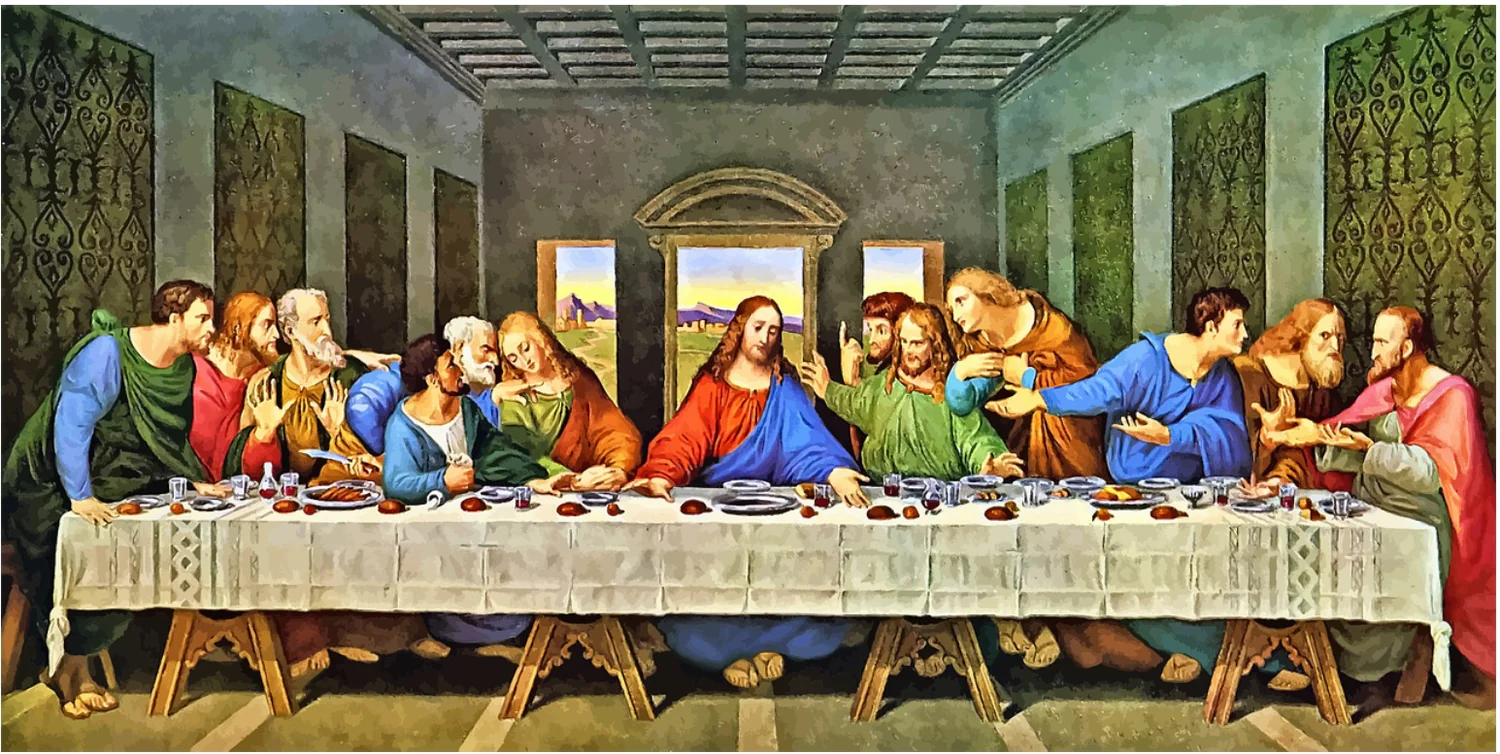
After he described this model of the emergence of rationality from the belly of mythic-literalism, he described a future transformation which he called a "mutation in cultural consciousness." And he referred to this as being "aperspectival."
In the image above the Leonardo painting, you see his definition of aperspectival, but he is careful to point out that this doesn't signify a "lack of" or "anti-" perspecitve, but instead he describes it as being "freed-from-a-single-perspective."
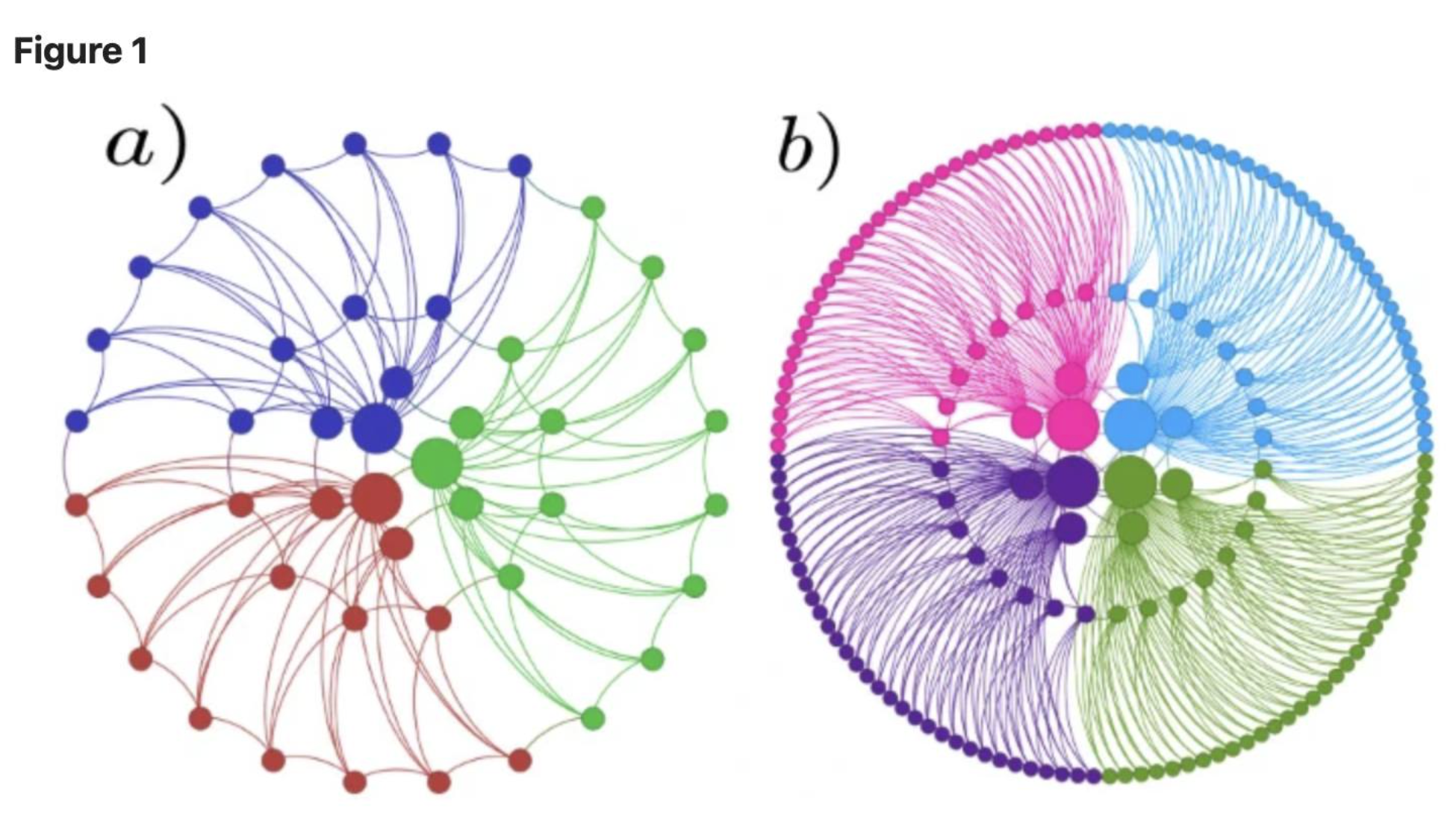
And this is what I believe bitcoin is poised to demonstrate to the world. I believe when Jean Gebser is describing a future signified by "aperspectival" mutation in consciousness such that we are not "bound to a singular, fixed vantage point," I believe he is prophetically envisioning a future driven on distributed consensus and proof-of-work. I believe bitcoin is the closest thing to a working model of 4th-dimensional structures for the re-orientation of human life away from centralized models like Facebook and Google and back into peer-to-peer exchanges of valuable information and small-world network effects.

This is one of my favorite videos about bitcoin, and in addition to describing the Byzantine General's problem well and providing the context for proof-of-work as the solution, this video also demonstrates the importance of choice and the value of using one's own free-will to set new agendas in one's own life.
https://www.youtube.com/watch?v=t70iQnoxY7I
@CosmosStag eloquently articulates the way in which our lack of predictions about the future due to these diagonal lines which represent the speed of light can be used as a benefit to ourselves as we unshackle ourselves from the predictable patterns which we've amassed in the past yet which no longer serve us, and we become free to chart our own path into the future through our embrace of the tool of choice.
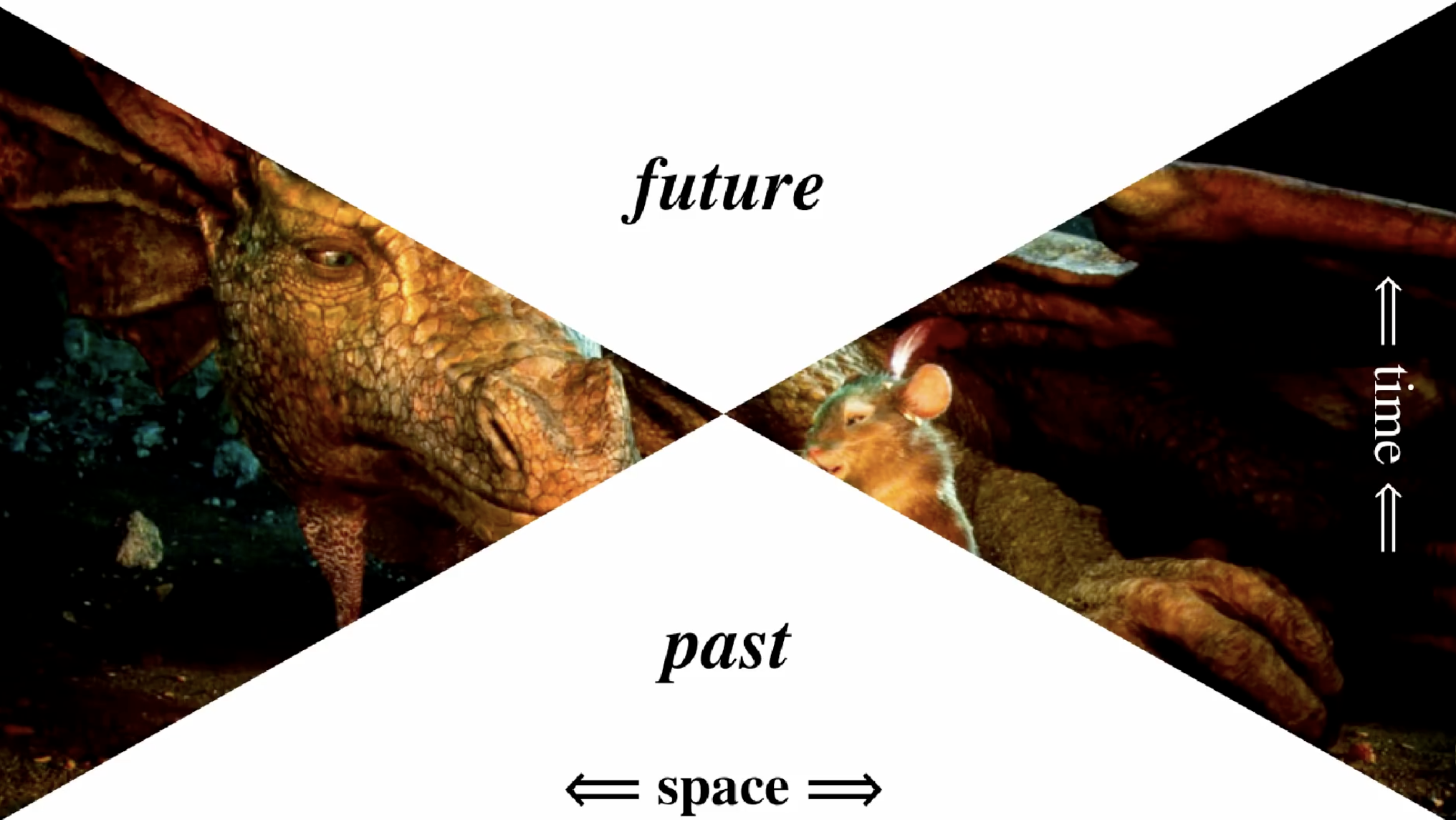
Our ability to choose our future means the ability to invent a world of our making. Choice returns us to our deepest reverence. This is the key insight in the culmination of the Matrix. Agent Smith thinks he's finally defeated Neo, reprogramming Neo as a copy of himself, but this has the opposite of its intended effect. This reboots the matrix, undoing the mechanism of central controls and gives rise to the individuating power of agency and choice.
Thanks for tuning in! Let me know if you have any questions. Cheers!
https://www.youtube.com/watch?v=C5JVFCouXIU
[[to read later]]
great thread [[toread]]
Wanted to come back to this post to share a few additional pieces of content that I think are interesting to consider in this context.
Recently, I noticed a paper which argued that rotations in physical space for dynamic systems can return to their origin by doubling the walk and uniformly scaling all rotation angles. I believe this is connected to the argument that all motion is vector reflection which I included in the sub comments of this original post. You can read this new paper here:
Walks in Rotation Spaces Return Home when Doubled and Scaled
https://arxiv.org/abs/2502.14367