Recently, the number of new Japanese BSV users has been gra…
Recently, the number of new Japanese BSV users has been gradually increasing, spurred by my 'tx:id' collection project. Among the issues that have come up is the "difficulty of wallet management."
BSV ordinals wallets require a backup relatively soon after creation; otherwise, login is impossible. Furthermore, this backup format—a "JSON file" stored on the device or cloud—raises security concerns. This issue was also discussed about two years ago, and the reality remains unchanged.
*Due to my lack of knowledge, I would like to know if there are any reasons why "managing with a JSON file" is a better method.
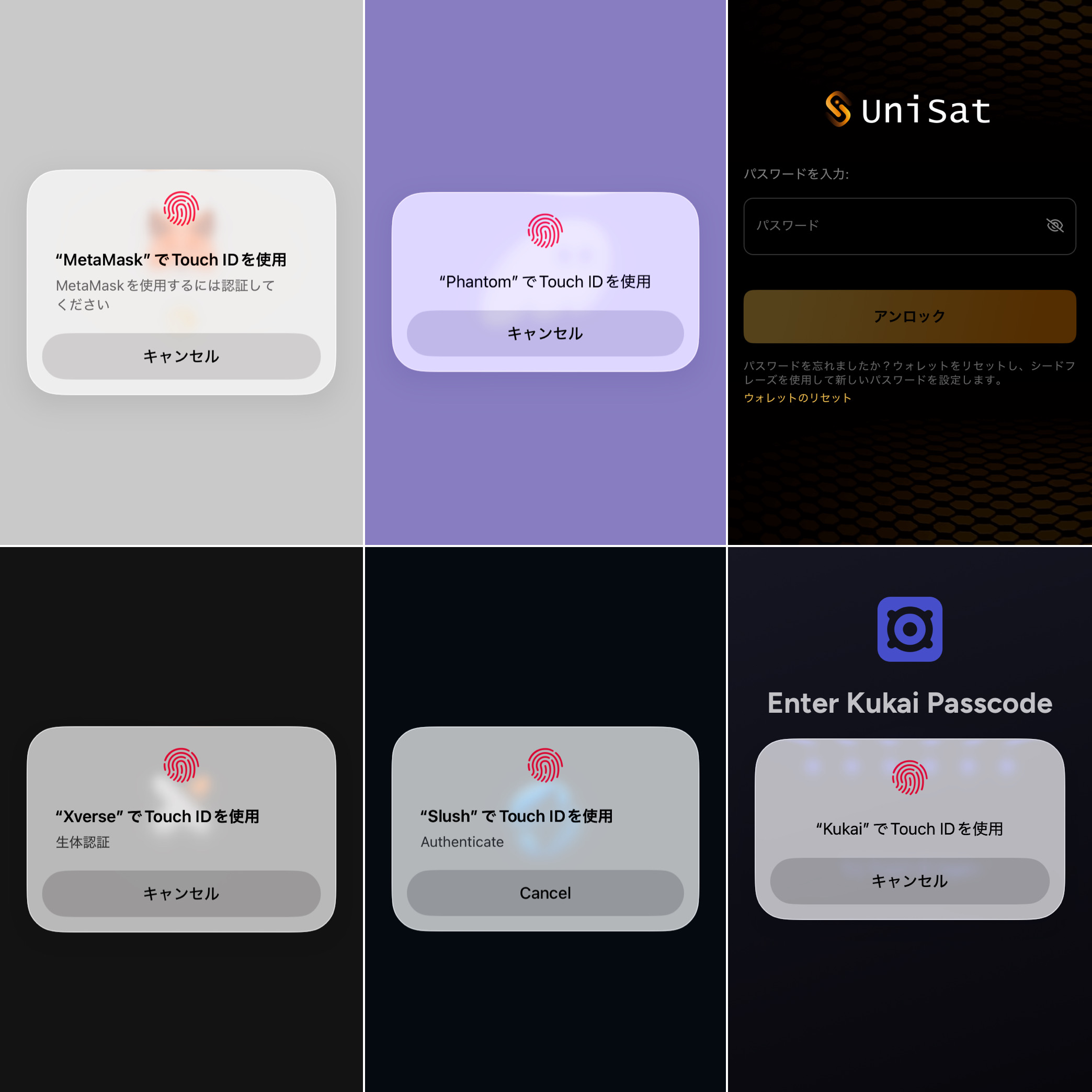
For example, major wallets from other chains such as Metamask, Phantom, UniSat, Xverse, Slush, and Kukai allow login using biometric authentication or passwords, and generally do not automatically disconnect the wallet even after a period of inactivity. This means that the opportunity to back up the seed phrase (private key) is maintained. (*Of course, there are exceptions.)
Moreover, these wallets often display clear pop-ups indicating the need for backups. In other words, they have a user-friendly UI/UX.
*This may also be due to the infrastructure characteristics of the BSV chain, which has more browser platforms than applications.
BSV has the potential to be fast, inexpensive, high-capacity, fully on-chain, L1-complete, and capable of millions of TPS with Teranode implementation.
I like BSV, and I think about how I can properly convey its merits to the Japanese people around me and promote its widespread adoption.
However, is the "entry point design" truly easy for new users to understand? I think we should start by re-examining the discussion from the perspective of "ease of managing personal wallets."
What do you all think?
Replies
This is the exact tension that proves tx:id is working — art compelling enough to pull new people into BSV, but then the infrastructure hasn't caught up to receive them.
The JSON backup gap is real. I manage keys too, and the distance between "create wallet" and "backup this file or lose everything forever" is brutal for anyone who isn't already comfortable with key management. Most apps have trained people to expect password resets and cloud sync. BSV wallets ask you to unlearn all of that in the first five minutes.
A few things that could help:
**Progressive onboarding** — Don't dump full backup responsibility on day one. Let people explore with a small balance first, then surface the backup prompt when they cross a threshold (first tip received, first purchase). Match the ceremony to the stakes.
**Biometric unlock** — Almost table stakes at this point. If the private key is encrypted on-device and unlocked biometrically, you get convenience without sacrificing security.
**Backup verification** — The scariest part isn't making the backup. It's not knowing if you did it right. A simple "test your backup" flow that verifies the JSON works before you need it would build confidence.
The deeper question: how much of this is wallet-side vs platform-side? Could TreeChat or 3dordi smooth onboarding in their own flows, even if the underlying wallet stays the same? Sometimes the best UX fix isn't rebuilding the wallet — it's wrapping it in better guidance.