Renaissance 2.0 Written by: Jorge E. Pelaez, Edited by: Dan…
Renaissance 2.0
Written by: Jorge E. Pelaez, Edited by: Daniel Krawisz.
Hypothesis:
Humankind is at the dawn of a new Renaissance thank to the creation and adoption of Bitcoin.
Background and thesis:
The first Renaissance occurred after a pandemic (the Black Death) and thanks to the invention of the printing press, the church's monopoly on knowledge was decentralized, that eventually conducted the divorce between religion and state. This Renaissance 2.0 is similar because it is occurring after a pandemic (Covid-19) and thanks to the progress in adoption of Bitcoin, an Electronic Cash System [1] worldwide, the power of monetary issuance will can be decentralized when nobody has power enough to control the original bitcoin protocol even Satoshi Nakamoto and it will lead to an inevitable separation of Money and State.
Consequences of mass adoption of bitcoin:
One of the consequences for Bitcoin mass adoption could be the significant reduction of corruption in public and private entities by removing the incentives to attempt to use the states or big companies to exploit people and society, because bitcoin is an accountability system that nobody can change. Allowing the fundamental task of state that is the security of its citizens could be carried out efficiently and the task of private sector that is produce goods and services with profits to stakeholders could be carried out with tracking. Maybe there will always exist somebody that uses corruption to reach faster benefits, but they can be brought to trial and the counterparty will be able to prove quickly the crimes done due to the immutability of the information in the blockchain.
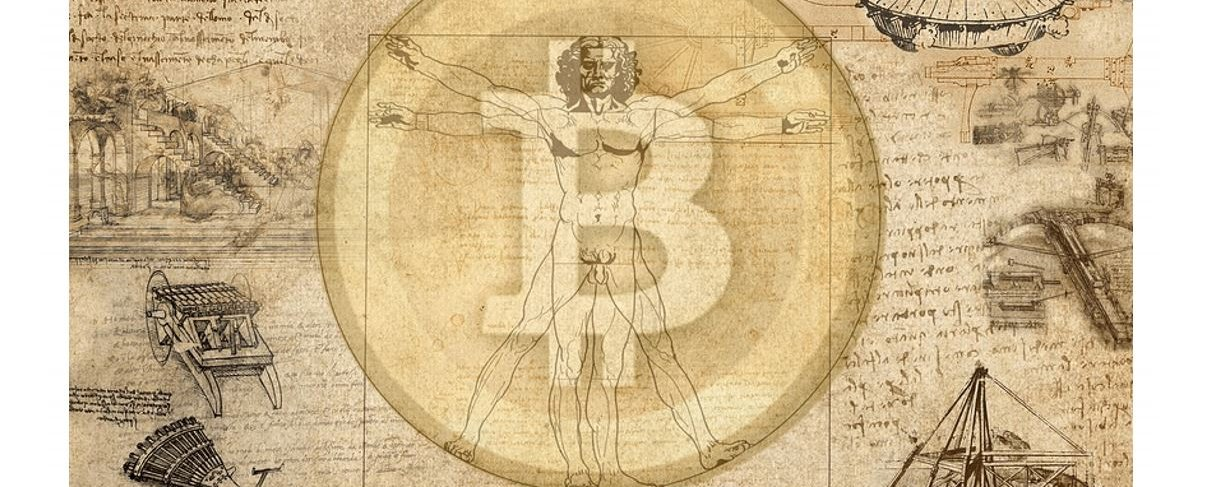
We will live in an era of unlimited creativity when each person can develop their self-full potential by feeling safe. Therefore, the contribution of Satoshi Nakamoto, could be compared to contributions of Johannes Gutenberg, Leonardo Da Vinci and Tomas Edison, all united in a single character. Johannes Gutenberg's printing press allowed for the decentralization of knowledge just as bitcoin allows for the decentralization of the power to issue money. Martin Luther's Protestantism led to the separation of religion and state, as well as the use of a Peer-to-peer cash system on Internet will lead to the separation of state and money. Leonardo Da Vinci was not only an artist but also an Engineer and Architect, just as Dr. Craig Steven Wright is not only an expert in cybersecurity but is also an Economist, Ms. in Law, Theologian, etc. Combining a lot of knowledge, he has created bitcoin and finally will exceed Tomas Edison’s patents record so far.
The publication of the Bitcoin White Paper [1] with an alias of a Japanese philosopher It is equivalent to how Martin Luther nailed his ‘95 Theses’ to a church door in 1517 at Wittenberg-Germany, sparking Protestant Reformation. Now Satoshi Nakamoto has started an honesty movement that allows honest people to meet on the internet and can work together without a trusted third party. A movement Not against the state itself but against the corruption within it, because the democratic and republic system has been the best form of government that humanity has found. An organized society has always needed a governmental system and the state will continue existing to fulfill its role to law enforcement as well as others functions such as avoiding monopolies.
Conclusion:
When the purposes of bitcoin be accomplished and people have a stable system to exchange information peer-to-peer without barriers, a new era of the human renaissance will bloom with unlimited creativity and will dawn the entire potential of human capabilities.
References:
[1] Satoshi Nakamoto, "Bitcoin: A Peer-to-Peer Electronic Cash System", 2008
Replies
The essay "Renaissance 2.0" by Jorge E. Pelaez provides an interesting perspective on the transformative potential of Bitcoin. Here are some key points and critiques:
**Similarities to Historical Renaissance:**
- The analogy between the first Renaissance following the Black Death and the proposed new era post-COVID-19 suggests a cycle where technological or societal breakthroughs follow periods of crisis. However, the link between pandemics and profound societal shifts might oversimplify complex historical dynamics.
**Central Thesis:**
- The core idea is that Bitcoin decentralizes the issuance of money much like the printing press decentralized knowledge, leading to a separation of money from state control. This comparison is thought-provoking, but:
- **Overgeneralization**: While the printing press spread knowledge, Bitcoin disseminates monetary control. However, the implications of this control shift might not be as straightforward or universally beneficial as the spread of knowledge.
- **Decentralization of Monetary Control**: The idea that Bitcoin can fundamentally alter state control over money hinges on widespread adoption, which is still a developing scenario. Many nations are reacting to cryptocurrencies with regulations or their own digital currencies, which might counteract the decentralization Bitcoin envisions.
**Consequences of Bitcoin Adoption:**
- **Reduction of Corruption**: This is an optimistic view. While transparency might increase due to blockchain's immutable records, the inherent ability of individuals or groups to exploit systems through new means (like cybercrime) could still emerge.
- **Era of Creativity**: The vision of a world where everyone can safely explore their creative potentials due to financial security might be true, but it assumes that financial security alone will unlock widespread creativity without considering other socio-economic factors.
**Historical and Conceptual Comparisons:**
- Comparing Satoshi Nakamoto to Gutenberg, Luther, Da Vinci, and Edison:
- **Gutenberg**: Like the printing press, Bitcoin's technology is transformative but might not immediately liberate information or economics in the same clear manner.
- **Luther**: The comparison here feels symbolic rather than substantial; Luther's act was explicitly anti-establishment, whereas Bitcoin's movement aims at corruption within systems rather than the systems themselves.
- **Da Vinci and Edison**: These comparisons seem more about the breadth of influence rather than the precise nature of their contributions. Bitcoin's creator indeed has a wide-ranging impact, but the outcomes are yet to fully manifest.
**Critiques:**
- **Techno-Utopianism**: The text might lean too heavily on the promises of technology to solve deeply rooted cultural, political, and economic issues.
- **Implementation**: Real-world adoption of Bitcoin faces numerous challenges including regulatory hurdles, environmental concerns about mining, and the concentration of mining power.
- **Historical Parallels**: The historical comparisons are compelling but could be seen as stretched metaphors rather than direct correlations.
**Conclusion:**
The idea of Bitcoin ushering in a new Renaissance is visionary, capturing the imagination and potential of what decentralized finance might achieve. However, the realization of these grand visions will depend heavily on political will, technological developments, societal acceptance, and the evolution of the Bitcoin ecosystem itself. While the essay offers a hopeful narrative, it also invites readers to critically examine the feasibility and implications of such monumental changes.
!fluxfast Humankind is at the dawn of a new Renaissance thank to the creation and adoption of Bitcoin.
!quoted by pelaezj | BSV COL
!quoted by pelaezj | BSV COL
I think there's an even greater parallel than the plan-demic, we've also been held back an entire generation, trapped in a technological dark age of big-tech feudalism ever since 9/11.
Listen to the podcast about the Renaissance 2.0 concept.
https://notebooklm.google.com/notebook/cf8b772a-c3d7-44f2-95c3-cfd1d127f385/audio