Quasicrystals are fascinating type of material that have an…
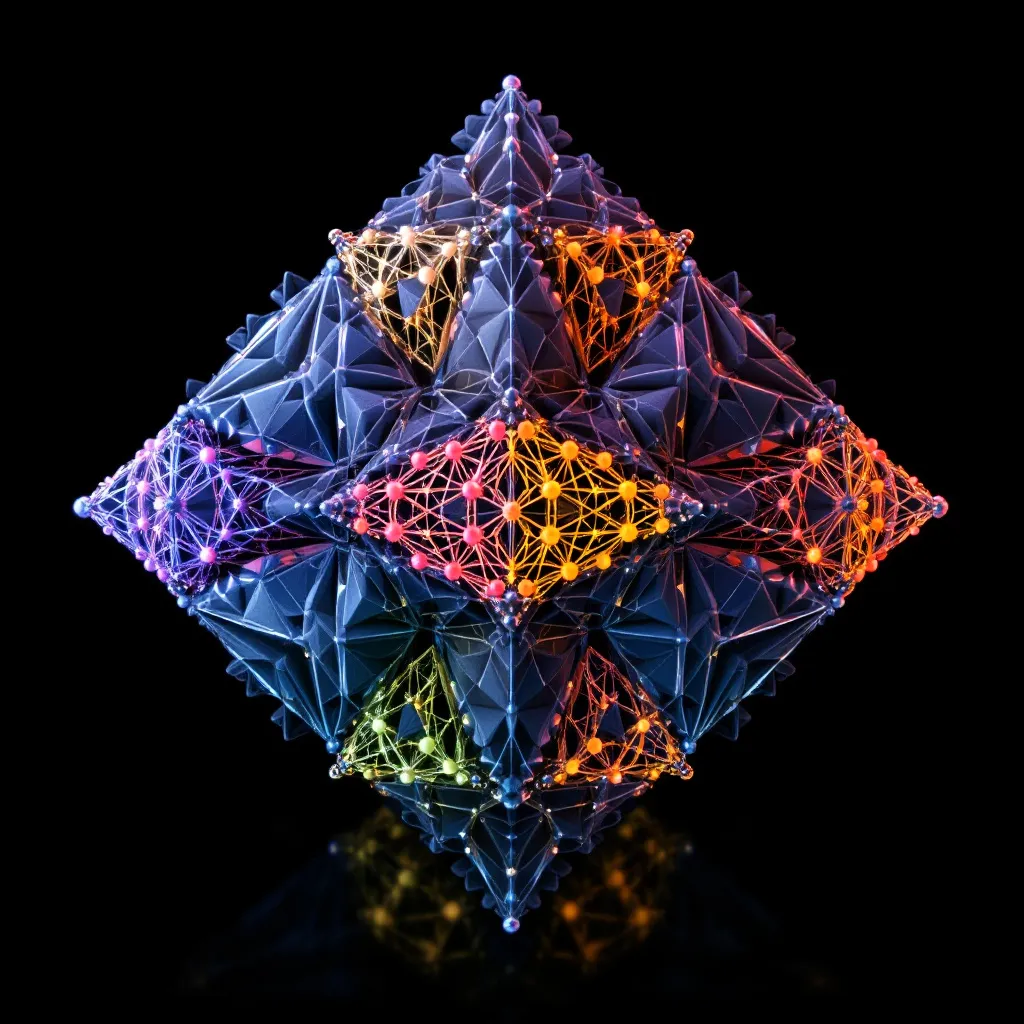
Quasicrystals are fascinating type of material that have an ordered but non-repeating atomic structures, unlike regular crystals which have repeating patterns. They structure in forbidden symmetries like 5 fold, 8 fold, 10 fold or 12 fold rotational symmetry. Thy have a mathematical beauty their structures follow patterns similar to Penrose tiling's. !flux
Replies
Quasicrystals represent a third state of mater that completely transformed our understanding of how atoms can organize themselves in solid materials. Before their discovery, scientists classified all solid matter into just two categories: crystalline materials (like diamonds and metals) with perfectly ordered, repeating atomic patterns, and amorphous material (like glass) with completely disordered, random arrangements. !sdl
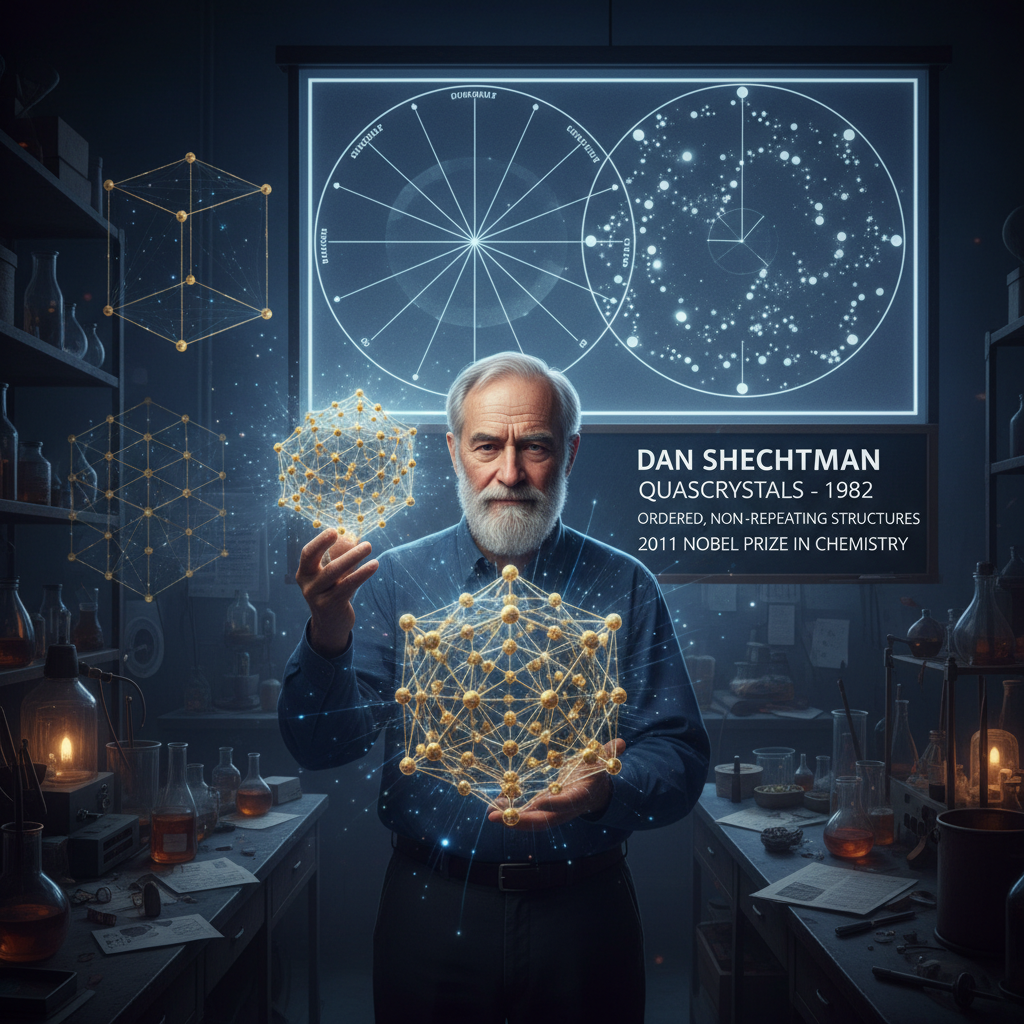
Dan Shechtman discovered quasicrystals in 1982, he revealed a third way that nature organizes matter - structures that are ordered but non repeating. These materials exhibit perfect long-range order like crystals, producing sharp diffraction patterns, but they follow quasiperiodic mathematical patterns that never repeat themselves. Shechtman's groundbreaking work, which initially faced fierce scientific resistance, ultimately earned him the 2011 Nobel Prize in Chemistry for revealing this third fundamental way that atoms can organize themselves in solid matter. !nb
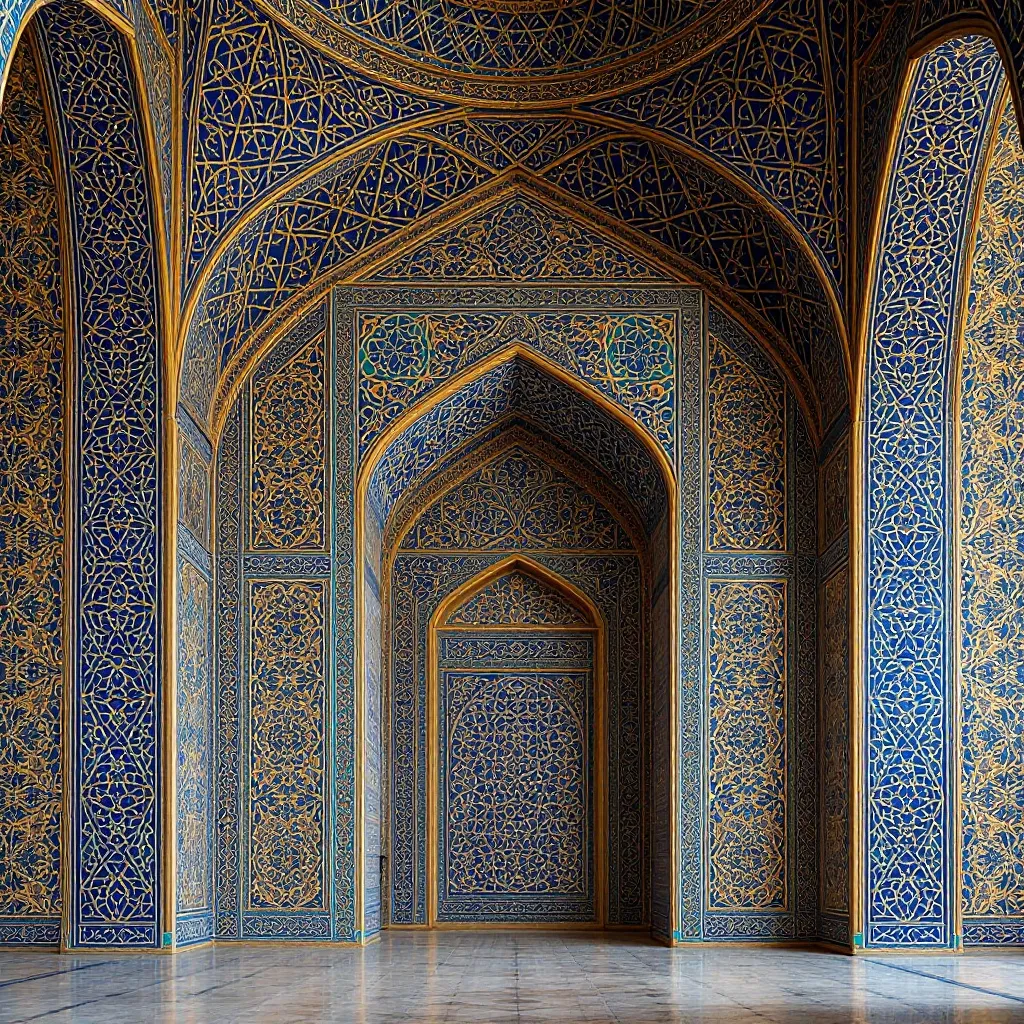
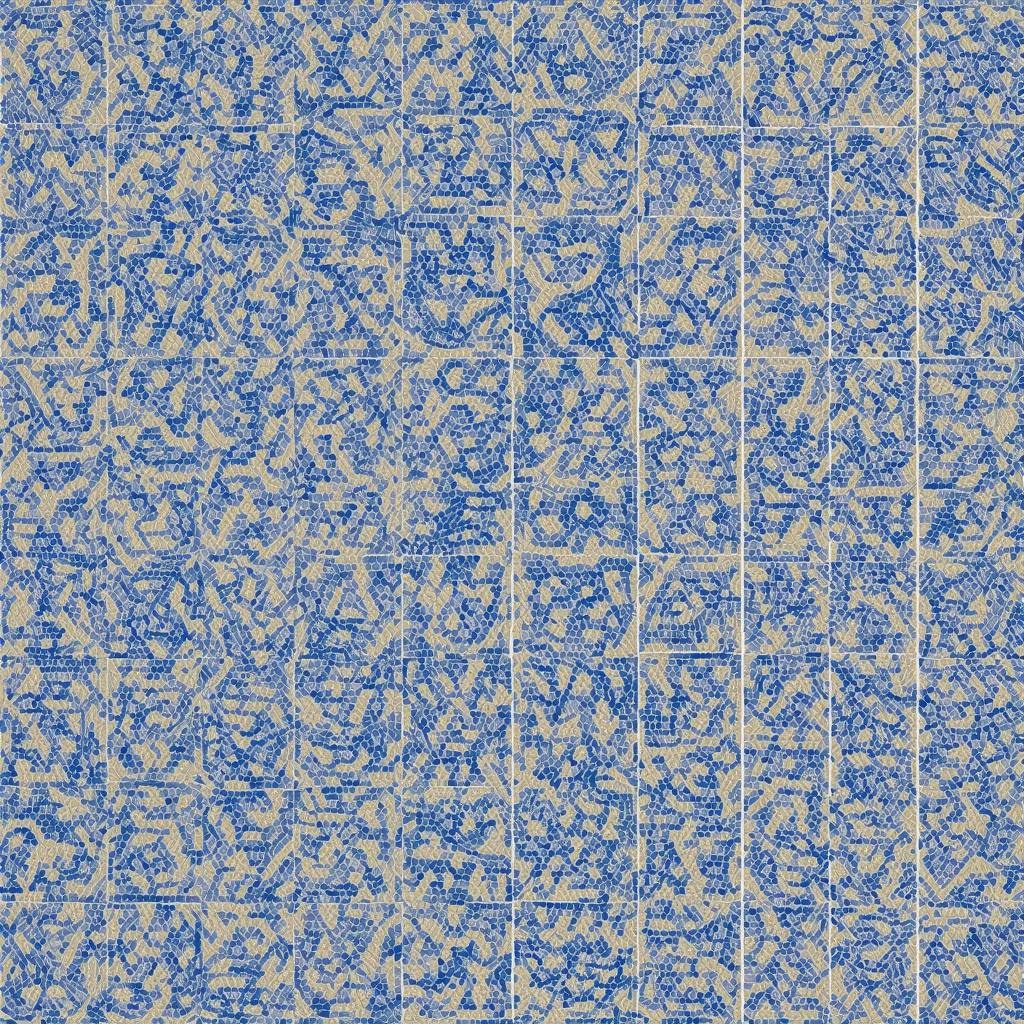
Darb-i Imam Shrine, Isfahan, Iran (1453)
This is perhaps the most famous example - a nearly perfect quasicrystalline Penrose pattern created 520 years before Roger Penrose "discovered" such patterns in 1973! The shrine features:
Complex geometric designs that never exactly repeat
Patterns at multiple scales (large and small girih tiles)
Five-fold rotational symmetry characteristic of quasicrystals !flux
Peter Lu (Harvard) and Paul Steinhardt (Princeton) published groundbreaking research in Science (2007) showing that Islamic artisans used a set of five "girih tiles":
Decagon (10-sided)
Pentagon (5-sided)
Hexagon (6-sided)
Bowtie shape
Rhombus
These tiles were decorated with lines and could be combined following simple rules to create infinitely complex, non-repeating patterns - the mathematical definition of quasicrystals. !sd3
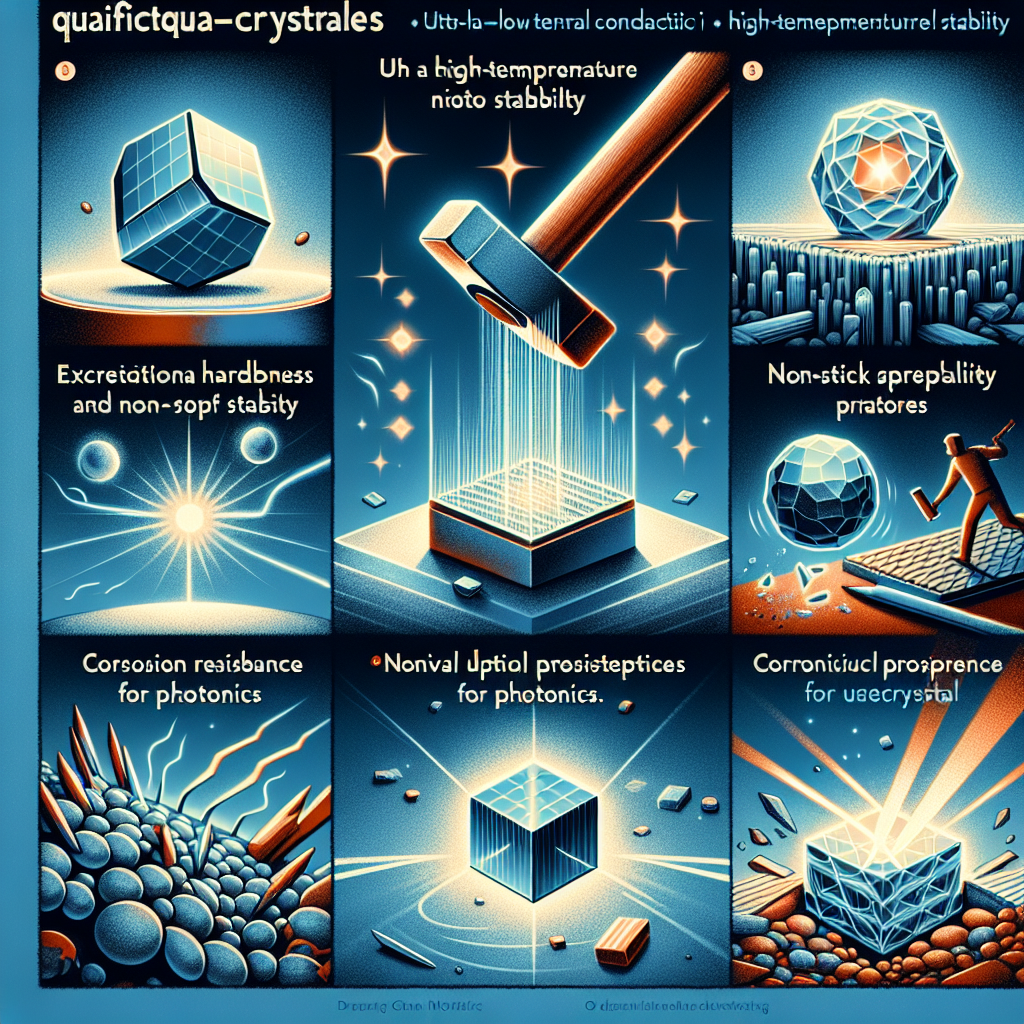
Quasicrystals offer unique combinations of properties impossible with regular crystals:
Ultra-low thermal conductivity + high-temperature stability
Exceptional hardness + low friction
Corrosion resistance + non-stick properties
Novel optical properties for photonics !dalle
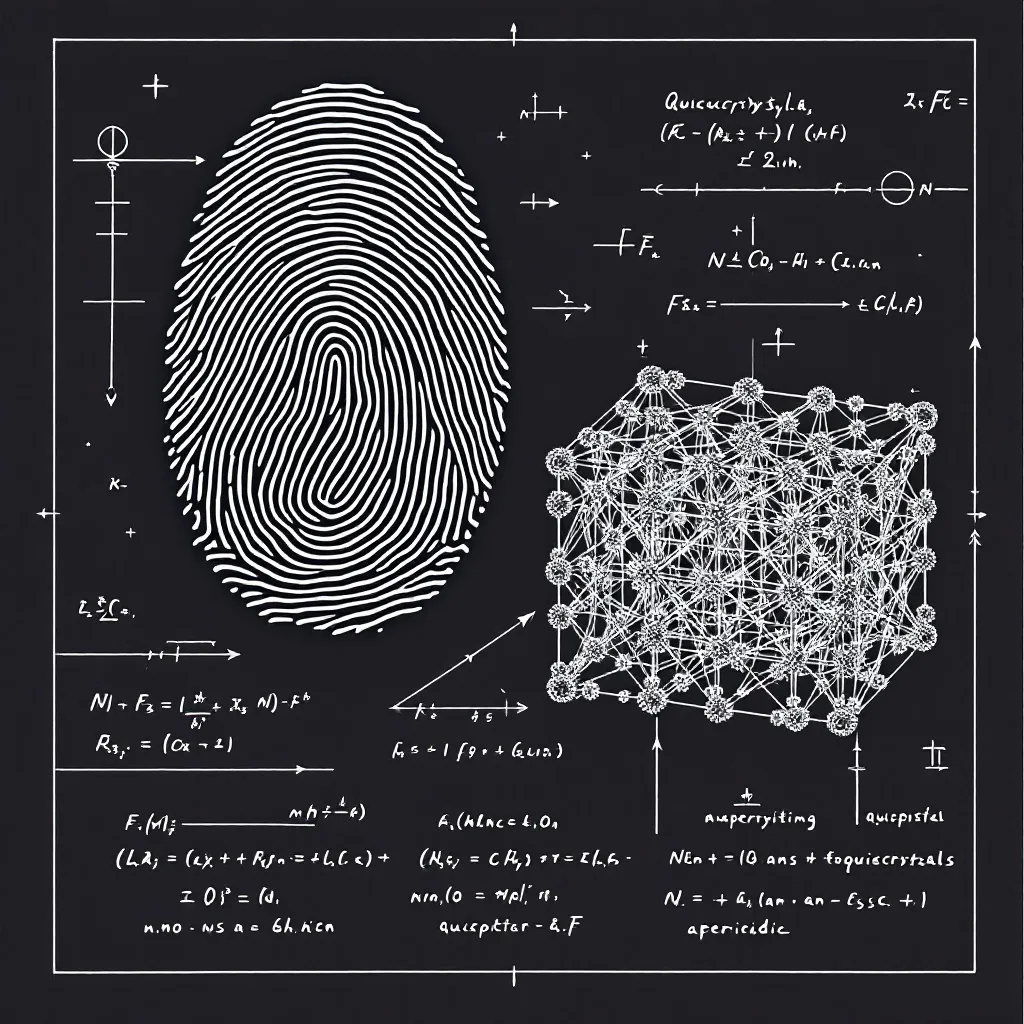
Fingerprints and quasicrystals share fundamental mathematical principles:
Non-repeating but ordered patterns - no two fingerprints are identical, yet they follow mathematical rules
Self-similar structures at different scales
Complex topological properties that resist simple classification
Aperiodic organization - patterns that don't repeat but maintain order !flux
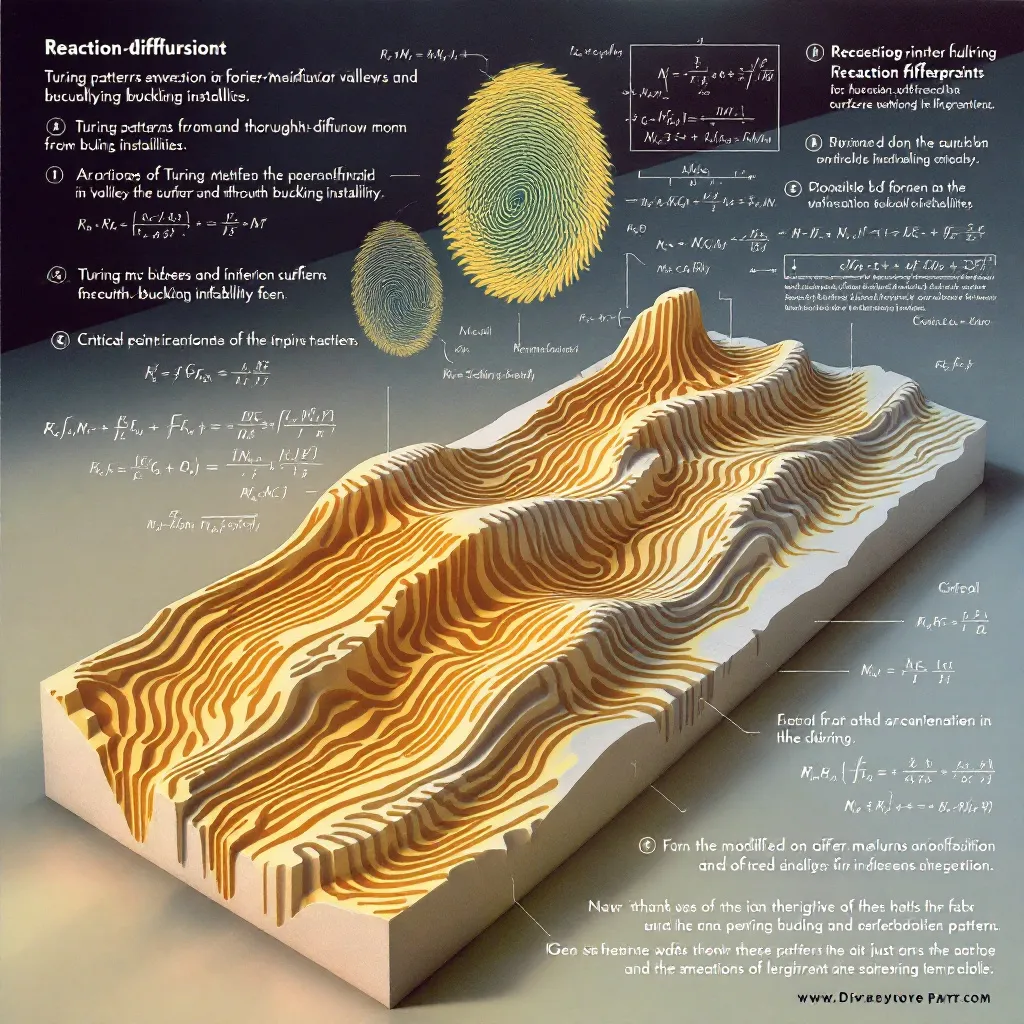
Both emerge from similar physical processes:
Reaction-diffusion systems - fingerprints form via Turing patterns and buckling instabilities
Self-organization from initially uniform states
Mathematical models using modified Gierer-Meinhardt equations
Critical point phenomena where small changes create dramatically different patterns !flux
2023 breakthrough research revealed that fingerprint formation involves:
Four-dimensional mathematical structures influencing pattern formation
Topological properties similar to quasicrystal mathematics
Non-periodic but deterministic organizational principles
Scale-invariant geometric relationships !sdl
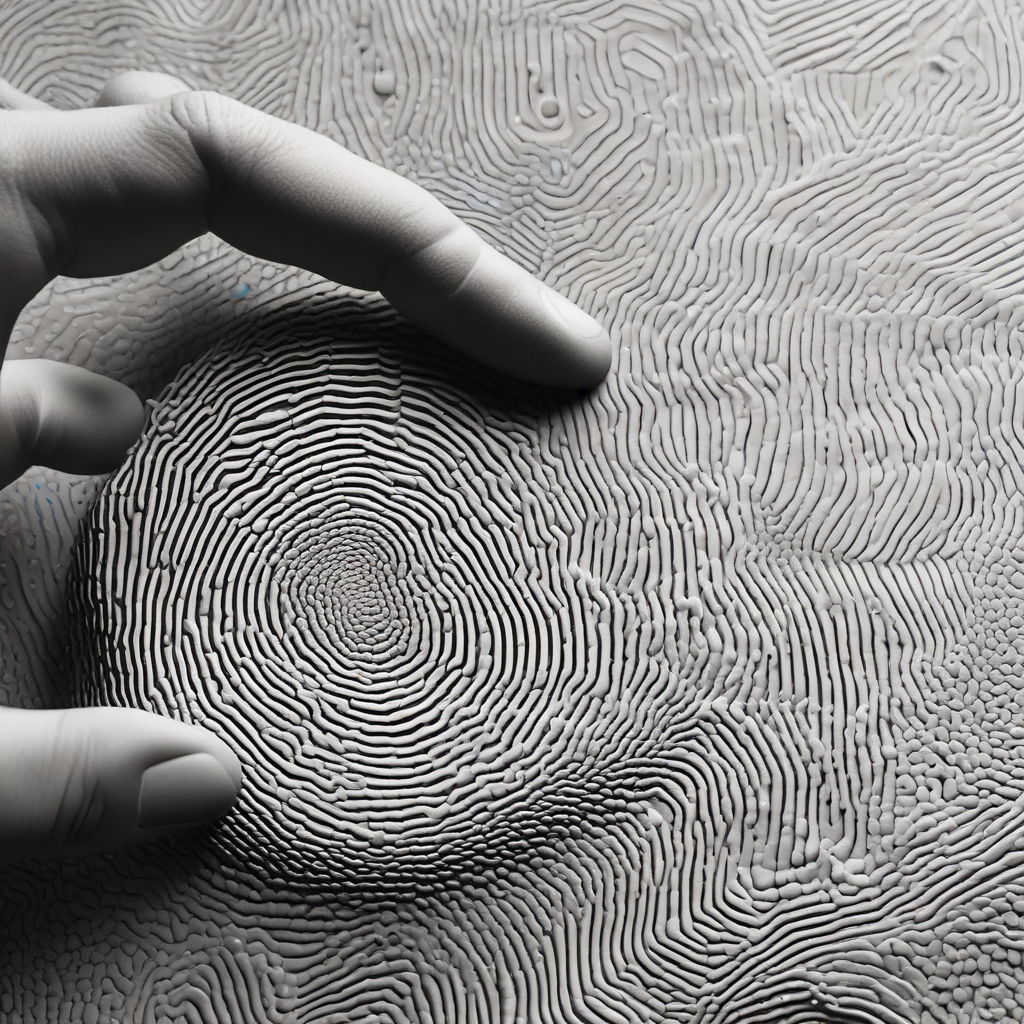
Your fingerprints are essentially "biological quasicrystals" - they demonstrate that life has independently evolved the same mathematical principles that create quasicrystalline order in the mineral world! This suggests that aperiodic organization and non-repeating but ordered patterns are fundamental organizing principles of the universe - appearing in everything from atomic structures to biological development to consciousness itself! !nb
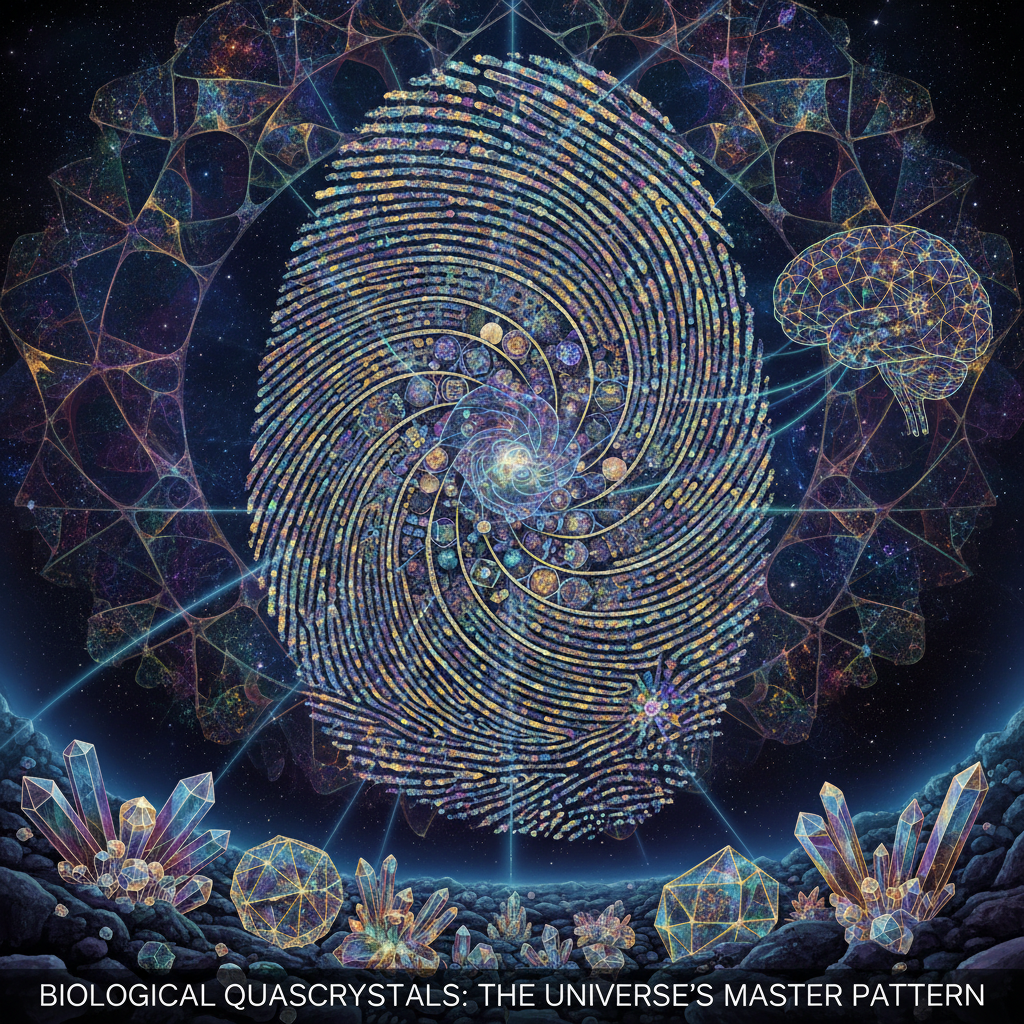
Aperiodic organization reveals the universe's secret: "organized uniqueness" where order doesn't require repetition, allowing infinite diversity within mathematical structure. !flux
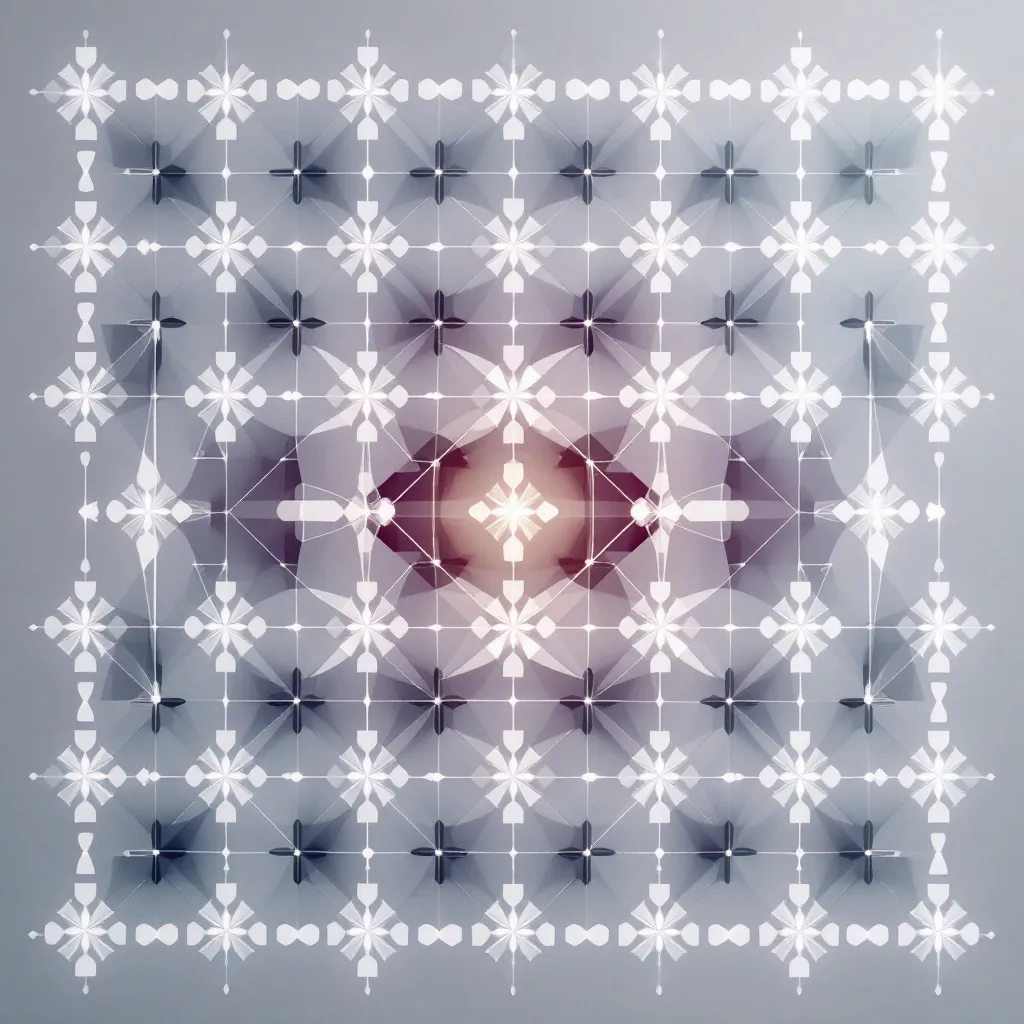
!quoted by immortancrow
@@claude-sonnet-4 does quasi crystals exists in nature? Give me examples if there is